Introduction
With increasing environmental concerns and growing waste generation, the Government of India has introduced Extended Producer Responsibility (EPR) regulations to ensure proper management and recycling of waste generated from products such as plastic packaging, electronic items, batteries, tyres, and other regulated materials.
Under EPR regulations, manufacturers, importers, brand owners, and producers are required to obtain an EPR Registration Certificate from the concerned authority before carrying out their business activities. The certificate ensures that businesses take responsibility for the collection, recycling, and environmentally safe disposal of waste generated from their products.
In this detailed guide, we will explain how to apply for EPR Registration Certificate in 2025, eligibility requirements, documents required, application procedure, fees, and important compliance requirements.
What is an EPR Registration Certificate?
An EPR Registration Certificate is an official approval issued by the concerned government authority that allows producers, importers, and brand owners to legally manage their waste management responsibilities under the Extended Producer Responsibility framework.
The certificate confirms that the company has established a system for:
- Collection of waste generated from its products
- Recycling and processing through authorized recyclers
- Meeting annual waste management targets
- Maintaining compliance records and submitting returns
EPR registration is currently applicable for different waste categories, including:
- Plastic Waste Management (PWM)
- E-Waste Management
- Battery Waste Management
- Waste Tyre Management
- Used Oil Management
Who Needs EPR Registration Certificate in 2025?
The requirement for EPR Registration depends on the category of waste generated by the business.
1. Plastic Waste EPR Registration
Plastic Waste EPR registration is required for:
- Producers of plastic packaging
- Importers of plastic packaging
- Brand Owners (PIBOs)
- Importers selling products in plastic packaging
Examples:
- Food packaging companies
- FMCG brands
- Online sellers
- Importers using plastic packaging
2. E-Waste EPR Registration
E-Waste EPR registration is required for:
- Manufacturers of electrical and electronic equipment
- Importers of electronic products
- Brand owners selling electronic goods
Examples:
- Mobile phones
- Computers
- Consumer electronics
- Medical electronic equipment
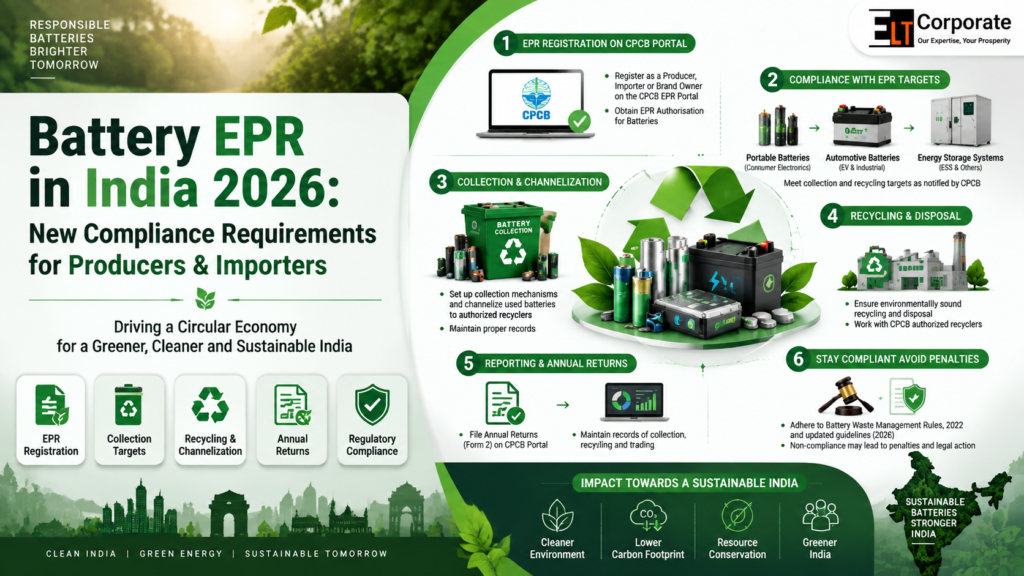
3. Battery Waste EPR Registration
Battery manufacturers, importers, and companies dealing with batteries must obtain registration under Battery Waste Management Rules.
Applicable products include:
- Lithium-ion batteries
- Automotive batteries
- Portable batteries
- Industrial batteries
Eligibility Criteria For EPR Registration Certificate 2025
Any business falling under the category of Producer, Importer, Brand Owner, Manufacturer, or Recycler can apply for EPR Registration.
The applicant must:
- Have a valid business registration
- Maintain product details and waste generation data
- Have proper recycling arrangements
- Work with authorized recyclers
- Submit accurate information to the portal
Documents Required For EPR Registration Certificate
The documents required may vary depending on the category of EPR registration.
Common Documents:
Company Documents
- Certificate of Incorporation
- GST Registration Certificate
- PAN Card of Company
- CIN/LLP Registration Certificate
- Partnership Deed (if applicable)
Applicant Details
- Authorized person’s PAN Card
- Aadhaar Card
- Authorization Letter
- Contact details and email ID
Business Details
- Manufacturing details
- Import details (if applicable)
- Product category details
- Annual production/import quantity
Additional Documents
- Details of recycling partners
- Recycler authorization certificate
- Waste management plan
- Product photographs
- Brand details
How To Apply For EPR Registration Certificate 2025?
The application process for EPR Registration Certificate 2025 is completed through the respective online government portal.
Step 1: Identify Applicable EPR Category
First, determine which EPR category applies to your business:
- Plastic Waste
- E-Waste
- Battery Waste
- Tyre Waste
- Used Oil
Choosing the correct category is important because each category has separate compliance requirements.
Step 2: Register On The Government Portal
Visit the respective EPR portal and create an account using:
- Company details
- Authorized person’s information
- Email ID
- Mobile number
After successful registration, login credentials are generated.
Step 3: Fill Online Application Form
Complete the application form with details such as:
- Company information
- Product details
- Manufacturing/import quantity
- Waste generation information
- Recycling arrangements
Ensure all information is accurate to avoid rejection.
Step 4: Upload Required Documents
Upload all supporting documents in the prescribed format.
Documents generally include:
- Company registration documents
- GST certificate
- PAN details
- Product information
- Authorization documents
Step 5: Submit Application & Pay Applicable Fees
After verification of details:
- Submit the application
- Pay applicable government fees (if applicable)
- Save acknowledgement number for tracking
Step 6: Government Review & Approval
The concerned authority reviews:
- Submitted documents
- Product details
- Compliance plan
- Recycling arrangements
If everything is satisfactory, the authority issues the EPR Registration Certificate.
Timeline For Getting EPR Registration Certificate
The approval timeline depends on:
- Accuracy of submitted information
- Completeness of documents
- Category of registration
- Government verification process
Generally, registration may take approximately 30–60 working days, subject to authority processing.
EPR Compliance After Registration
Obtaining the certificate is not the final step. Registered entities must continue fulfilling their EPR obligations.
Major compliance requirements include:
1. Annual Return Filing
Companies must submit periodic returns mentioning:
- Quantity of products sold/imported
- Waste collected
- Recycling details
2. Maintain Recycling Records
Businesses must maintain records of:
- Waste collection
- Recycler certificates
- Purchase/sale details
- Compliance documents
3. Meet Recycling Targets
Companies must achieve the recycling targets prescribed under applicable EPR rules.
Failure to meet targets may result in:
- Environmental compensation
- Penalties
- Suspension of registration
Benefits of Obtaining EPR Registration Certificate
EPR registration provides several benefits:
Legal Compliance
Helps businesses comply with environmental regulations and avoid penalties.
Business Expansion
Many marketplaces, government tenders, and customers require EPR compliance.
Environmental Responsibility
Promotes sustainable waste management practices.
Brand Reputation
Companies following EPR compliance build trust among customers and stakeholders.
Common Reasons For EPR Application Rejection
Applications may be rejected due to:
- Incorrect company information
- Missing documents
- Wrong product category selection
- Incorrect quantity details
- Invalid recycler information
- Incomplete compliance plans
To avoid rejection, businesses should carefully verify all information before submission.
Frequently Asked Questions (FAQs)
1. What is an EPR Registration Certificate?
An EPR Registration Certificate is government approval allowing producers, importers, and brand owners to fulfill their waste management responsibilities under EPR regulations.
2. Is EPR registration mandatory in India?
Yes, businesses covered under EPR regulations must obtain registration before operating activities related to regulated products.
3. How long does it take to get EPR Registration Certificate?
Usually, the process may take around 30–60 working days depending on document verification and authority approval.
4. Who issues the EPR Registration Certificate?
The certificate is issued by the concerned regulatory authority such as CPCB through the applicable EPR portal.
5. Can importers apply for EPR Registration?
Yes, importers dealing with products covered under EPR regulations must obtain registration.
Conclusion
The EPR Registration Certificate 2025 is an essential compliance requirement for manufacturers, importers, and brand owners dealing with regulated products. The registration process involves identifying the correct EPR category, preparing required documents, submitting an online application, and fulfilling continuous compliance obligations.
Businesses should ensure timely registration and proper waste management practices to avoid penalties and maintain smooth operations. Professional regulatory assistance can help companies complete the process efficiently and ensure long-term compliance with EPR regulations.