India is witnessing an exponential rise in its consumption of batteries due to the proliferation of electric vehicles, gadgets, renewable energy technologies, and power storage because of the rise in demand for batteries. With the growth of battery consumption, the collection, recycling, and disposal of spent batteries safely become critical environmental obligations and duties.
The concept of EPR for battery waste makes it obligatory for the manufacturers, importers, producers, and owners of brands to be responsible for the entire process of managing the battery life cycle from collection to safe disposal of batteries.
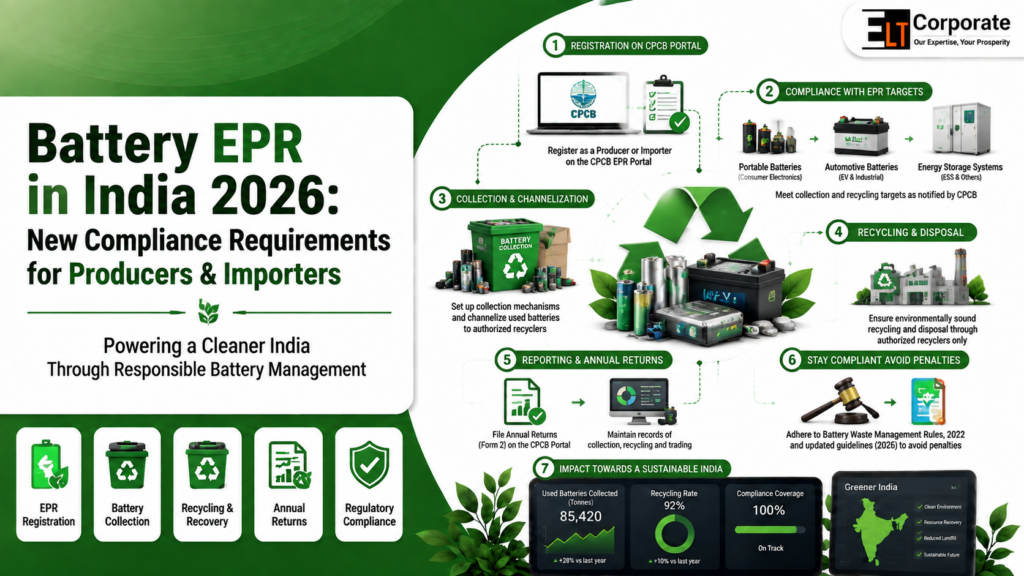
According to the Battery Waste Management Rules, those involved in the business of batteries need to procure the EPR authorization and dispose of the EPR for battery waste through recyclers whose services are authorized for purposes of disposal.
What is Battery Waste EPR?
Battery Waste EPR means the Extended Producer Responsibility regulations that obligate the manufacturers as well as importers of batteries to take responsibility for the disposal of batteries after they have been used.
The primary aims of EPR in battery waste are as follows:
- To promote the correct disposal of batteries
- To promote safe recycling of batteries
- To minimize hazardous waste
- To promote a circular economy
- To recover useful materials from batteries
Any business covered under the regulation of battery waste EPR must be registered with the Central Pollution Control Board (CPCB) to fulfil the recycling target.
Importance of EPR Certificate Registration for Battery Waste
Getting an EPR Certificate for Battery Waste is obligatory for any firms that make, sell, or import batteries in India.
The certification grants firms the right to work legally and comply with environmental laws.
The primary advantages of EPR Battery Waste Registration are the following:
1. Legal Compliance
EPR registration assists companies in acting according to battery waste management rules and avoiding penalties for non-compliance.
2. Efficient Waste Disposal
EPR compliance means that unwanted batteries are recycled through licensed recycling companies and not disposed of irresponsibly.
3. Enhanced Brand Image
Firms using EPR for battery waste show that they are committed to environmental protection and employ eco-friendly methods of doing business.
4. Opportunity to Use Recycling Network
Companies that are registered can also cooperate with recycling companies and waste collection partners.
What Entities Must Register Batteries Under EPR?
The following businesses are required to obtain battery waste. EPR registration:
1. Battery Makers
Manufacturers of batteries within India must register in order to comply with the EPR regulations associated with recycling.
2. Battery Importers
Those who bring batteries into India must ensure that the waste is managed appropriately after the end of the battery lifecycle.
3. Producers and Brand Owners
Any companies that sell batteries under their mark must ensure that they comply with the requirements to ensure the waste is handled appropriately.
4. Electric Vehicle Makers
Any makers of electric vehicles who utilise batteries in their vehicles must follow the battery waste provision.
5. Energy Storage Companies
Any companies carrying out storage of energy in batteries must ensure that the waste is managed responsibly.
Types of Batteries Covered Under EPR for Battery Waste
The Battery Waste Management system includes various categories of batteries, such as
- Portable battery
- Automotive battery
- Industrial Battery
- Electric vehicle batteries
- Lithium-ion Batteries
- Lead-acid Batteries
- Different types of rechargeable and non-rechargeable batteries
Businesses operating in any of these categories must determine whether they are subject to the terms or not.
EPR Certificate Registration Process for Battery Waste
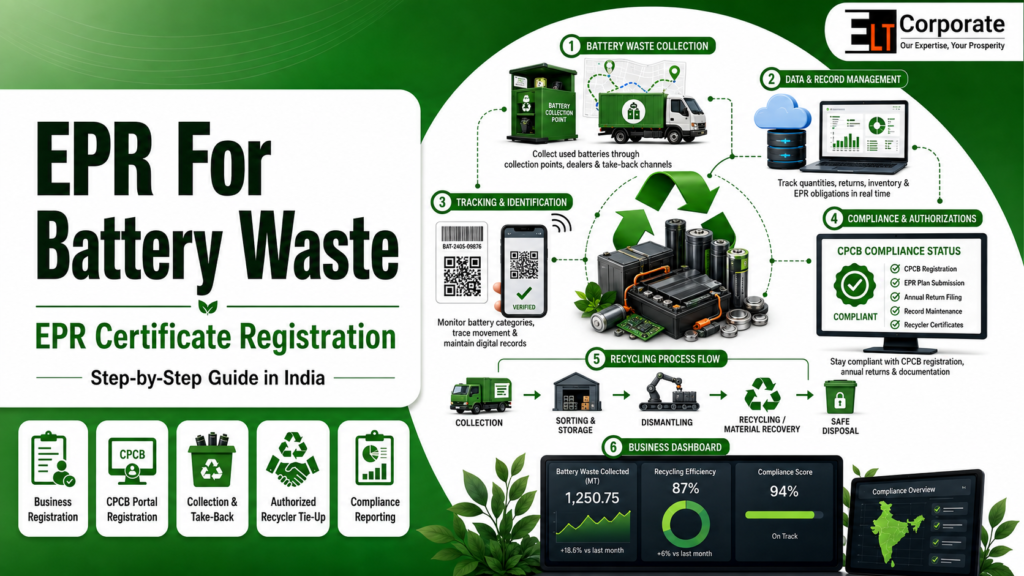
The EPR process for battery waste certification requires the completion of a number of compliance steps:
1. Establish Eligibility
Companies should ascertain whether they belong to the category of manufacturer, importer, or recycler according to the battery waste regulations.
2. Gather Necessary Documents
The basic documents needed for EPR Battery Waste certification include the following:
- Company incorporation documents
- Company PAN and GST
- Details of authorized person
- Product details
- Particulars of the battery
- Manufacturing/importing processes
- Previous compliance records (if any)
Step 3: Application for CPCB Portal
The applicant is supposed to fill in an online form via the EPR portal of the CPCB.
Step 4: Approval of Application
The concerned authorities will check the details submitted by the applicant and grant the EPR.
Step 5: Compliance Reporting
Once the EPR is granted to the applicant, the registered company needs to keep a record and file the compliance reports.
Responsibilities Under EPR For Battery Waste
Manufacturers holding an EPR authorization for battery disposal are expected to meet the following obligations:
Duties Related to Collection
Manufacturers must make arrangements for usable battery collection systems.
Duties Related to Recycling
Old batteries should be sent for recycling only to accredited recyclers.
Duties Related to Record-Keeping
Manufacturers must maintain records regarding the manufacture, import, collection, and recycling of batteries.
Duties Related to Filing Compliance Reports Each Year
Entities must complete the relevant reports and reach the recycling targets in a timely manner.
Importance of Authorized Recyclers in EPR for Battery Waste
The role of authorized recyclers is significant in fulfilling the objectives of EPR for battery waste.
Authorized recyclers are responsible for:
- Waste battery collection
- Safe process and disassembly
- Material recovery
- Environmentally sound disposal
- Issuing recycling certificates to manufacturers
- Collaborating with authorized recyclers helps businesses comply with EPR requirements successfully.
How Professional Assistance Helps in EPR Certificate Registration for Battery Waste
In order to manage EPR requirements related to battery waste, a thorough understanding of the regulations, documentation, and procedures is necessary.
Consultants assist clients in the following ways:
- Assess eligibility.
- Prepare needed documentation.
- Register on the CPCB portal
- Develop a compliance strategy.
- Coordinate with recyclers.
- Provide annual compliance assistance.
Professional assistance can aid in getting the EPR process done faster and minimize the risk of non-compliance with the regulations.
Future of EPR for Battery Waste in India
As electric vehicles, renewable energy, and electronic products continue to grow, battery recycling will become increasingly popular.
The future of EPR for battery waste will rely on:
- Innovative recycling techniques
- Improved material retrieval
- Enhanced waste collection systems
- Improved compliance checking
- Green lifecycle management
Companies that implement good EPR practices will be well-equipped for future environmental regulations.
EPR Registration Process for Battery Waste
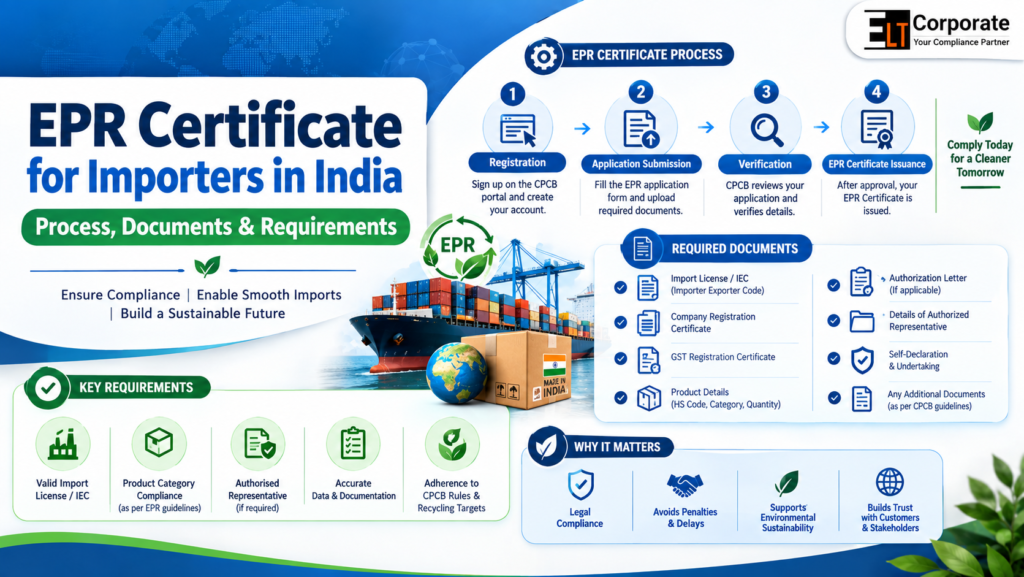
EPR certificate registration is a multi-step compliance requirement, in which the following steps must be followed:
Step 1: Check Applicability
First of all, it is necessary for companies to find out if they belong to the category of battery producers/importers/manufacturers or other obliged entities.
Stage 2: Submit Application on the CPCB Portal
All applicants must fill out the online form on the Central Pollution Control Board (CPCB) portal.
Stage 3: Checks and Certifications
The information provided by the applicant is processed for verification, and the EPR registration certificate is issued after approval.
Function of CPCB in EPR for Battery Waste Compliance
CPCB has a pivotal role in EPR for battery waste enforcement in India.
The tasks of CPCB include:
– Issuing registrations under EPR
– Monitoring the compliance activities
– Maintaining records online
– Monitoring the recycling targets
– Ensuring that authorized recycling operations are being carried out
Companies need to keep their compliance information up to date according to the EPR requirements for battery waste.
Responsibilities Related to Battery Recycling Through EPR
The most significant aspect of EPR involved with battery waste is to accomplish specified recycling targets.
It is essential for manufacturers to make sure that the discarded batteries are passed on to the registered recyclers who recycle the batteries in a safe manner.
Recycling aids in the following aspects:
- Recovery of precious metals from batteries
- Reducing the quantity of garbage disposed of in landfills
- Preservation of natural resources
- Avoiding hazardous contaminants
Benefits of EPR for Battery Waste Compliance
1. Legal Compliance
Registration under the EPR program helps businesses meet environmental regulations and avoid penalties.
2. Environmental Protection
Using proper battery recycling techniques will help prevent pollution of soil and water.
3. Better Reputation
Firms that comply with ecological regulations gain customer trust.
4. Recovery of Raw Materials
Battery recycling allows recovery of valuable components like lithium, cobalt, and nickel.
5. Sustainable Development
Compliance with EPR for battery waste ensures long-term sustainability of business operations.
Challenges in EPR for Battery Waste Compliance
Businesses can experience various hurdles such as
Lack of Knowledge
A large number of companies are oblivious about their responsibilities in accordance with battery waste regulations.
Complexity of Paperwork
Keeping correct records and filing correct information is a difficult task.
Management of Recycling Network
Efficient planning is necessary for locating authorized recyclers as well as making sure that the disposal is done correctly.
Changing Laws
New environmental laws keep emerging, thus necessitating constant updates and adjustments to the current state of affairs.
Professional assistance can significantly aid in dealing with the above-mentioned problems.
How Can Companies Sustain EPR Compliance?
Businesses need to undertake the following actions for assured compliance with EPR for battery waste:
– Keep precise records of sales and imports
– Keep records of battery numbers deployed in the market
– Collaborate with authorized recycling agencies
– Retain recycling certificates and documentation
– Perform regular compliance audits
– Keep CPCB records current
A suitable compliance management system protects companies from regulatory difficulties.
Function of Expert EPR Advisors
Administration of EPR Certificate Registration concerning Battery Waste necessitates an understanding of environmental laws and regulations, requiring all the paperwork to be done in compliance with CPCB procedures of CPCB.
Professionals assist corporations in:
- Evaluating eligibility
- Preparing documents
- Completing an application process via the CPCB portal
- Organizing compliance
- Meeting recycling requirements
- Being aware of the changes in the regulatory framework
Future of EPR for Battery Waste in India
Battery consumption is anticipated to increase significantly with the growing use of electric cars, renewable energy systems, and electronic equipment.
EPR for Battery Waste will do the following in the future:
- Use cutting-edge recycling techniques.
- Increase rates of materials recovered.
- Establish a circular economy approach.
- Ensure battery production sustainability.
- Enhance environmental monitoring.
Companies that use appropriate EPR strategies will be well-prepared for future legislation regarding the environment.
Why EPR Compliance is Important for Battery Importers
The role of battery importers in tackling post-consumer battery waste is important. Since the imported batteries will end up as waste, companies have to ensure that they are collected and disposed of correctly.
EPR compliance for battery importers can help in:
- Fulfilling the legal responsibilities as per the Battery Waste Management Rules.
- Avoiding penalization for breaching the environmental rules.
- Ensuring the safe disposal of used batteries.
- Keeping their waste management records clean.
- Supporting India in achieving its aim of a circular economy.
Is registration for EPR compulsory for importers in India?
Yes, EPR registration is compulsory for importers in India that fall under the definition of “obligated entities” in waste management regulations. Importers bringing products like batteries, plastic packaging, electronic products, and other products that are covered under the waste management legislation have a responsibility to collect, recycle, and dispose of the waste generated by the products in an environmentally sound way.
As per EPR for battery waste, battery importers must get registered with CPCB and comply with their Extended Producer Responsibility obligations, including the achievement of recycling targets and keeping records of their compliance and working with authorized recyclers. Failure to comply with EPR rules could lead to regulatory action being taken against them, penalties being imposed on them, and restrictions being placed on their operations. Thus, obtaining EPR registration would help the importers comply with laws and operate smoothly.
Documents Required for EPR for Battery Waste Registration
Important documents may include:
- Company Incorporation Certificate
- GST Registration Certificate
- PAN Card
- Authorized Person Details
- Product Details
- Import/Manufacturing Details
- Recycling Agreement
Proper documentation ensures smooth processing of EPR Certificate Registration for Battery Waste.
EPR Registration vs. EPR Certificate: Difference Explained
Often, people interchangeably use the terms “EPR Registration” and “EPR Certificate,” although the two terms signify different processes in the Extended Producer Responsibility (EPR) compliance procedure. This distinction between the two is crucial to ensure that producers, importers, manufacturers, and brand owners meet their obligations regarding environmental responsibilities provided by various waste management legislation.
The term “EPR Registration” means that the candidate has to apply for approval, i.e., its application is considered by the appropriate regulatory authority, whereas “EPR Certificate” means that the applicant has received approval from the corresponding governmental body.
| Basis | EPR Registration | EPR Certificate |
| Meaning | EPR registration is the application and approval process through which an obligated entity gets registered under EPR regulations. | The EPR Certificate is the official approval document issued after successful completion of the EPR registration process. |
| Purpose | It allows businesses to obtain legal recognition for fulfilling Extended Producer Responsibility obligations. | It serves as proof that the business has received approval and is authorized to operate under EPR. |
| Issued By | Generally issued/approved by the Central Pollution Control Board (CPCB) through the applicable EPR portal. | Issued by CPCB after verification and approval of submitted details. |
| Applicable Entities | Producers, importers, manufacturers, brand owners, and other obligated entities dealing with regulated waste categories. | Businesses that have completed the EPR registration process. |
| Process Stage | It is the initial compliance step involving application submission and document verification. | It is the outcome after approval of the registration application. |
Conclusion
EPR for battery waste is an important regulatory obligation for companies engaged in battery production, importation, and selling in India. By completing the EPR registration, businesses fulfill their environmental obligations, play a role in recycling processes, and contribute towards a sustainable future.
By following the best waste management practices, handling documentation, and working with licensed recycling service providers, companies can comply with the requirements set by EPR.
Businesses should ensure timely EPR registration and maintain a valid EPR certificate to comply with environmental regulations, avoid penalties, and support sustainable waste management practices in India.
Frequently Asked Questions
Q1. What do you understand by EPR for battery waste?
EPR for battery waste indicates that once the batteries are charged with battery materials, their manufacturers and importers must take responsibility to collect, recycle, and dispose of all the used batteries in an environmentally safe manner.
Q2. Is it essential for battery manufacturers to acquire EPR registration?
Yes, EPR registration is essential for all the manufacturers and importers of batteries as per battery waste regulations.
Q3. By whom is the EPR certification of battery waste provided?
The EPR certification for battery waste compliance is provided by the Central Pollution Control Board (CPCB).
Q4. What happens if a corporation doesn’t register for EPR?
The company has to face regulatory penalties and punitive measures according to environmental laws if it does not fulfill the requirements of EPR registration.
Q5. Why is it critical to recycle batteries?
Battery recycling helps to minimize pollution levels, recover useful materials, and manage sustainable resources.