Importing products into India comes with more than customs, GST, and product-specific regulatory requirements. For businesses that introduce products or packaging covered under India’s Extended Producer Responsibility (EPR) framework, environmental compliance can also become an important part of their operations.
An EPR Certificate for importers in India helps eligible businesses meet their responsibilities for the collection, recycling, processing, and environmentally sound management of applicable waste generated from products placed in the Indian market.
Depending on the type of product being imported, EPR obligations may apply under different waste-management frameworks, including Plastic Waste, E-Waste, Battery Waste and Tyre Waste regulations.
This guide explains who needs EPR registration, required documents, the registration process, compliance responsibilities, and common mistakes importers should avoid.
What Is EPR for Importers in India?
Extended Producer Responsibility (EPR) is a regulatory framework that places responsibility on eligible producers and other covered entities for managing the environmental impact of products after they enter the market.
For importers, this becomes particularly relevant when they bring regulated products, electrical and electronic equipment, batteries, tyres, or products involving regulated plastic packaging into India.
Instead of treating waste management as the responsibility of the end consumer alone, EPR places defined obligations on businesses introducing covered products into the Indian market.
The exact requirements depend on the product category, applicable rules, business role, and quantities placed on the market.
Do Importers Need EPR Registration in India?
Yes, importers may be required to obtain EPR registration when they fall within the scope of an applicable EPR framework.
For example, an importer may have EPR obligations if it imports:
- Electrical and electronic equipment
- Batteries or battery-containing products covered by applicable rules
- Tyres
- Products using regulated plastic packaging
- Other products covered under applicable EPR regulations
However, EPR applicability should not be determined only by the fact that a company has an Import Export Code (IEC).
The importer should first identify:
- What product is being imported?
- Which waste category does the product fall under?
- Is the importer considered a producer/importer/brand owner under the applicable framework?
- What quantity is being placed on the Indian market?
- What registration and reporting obligations apply?
Which Importers May Need EPR Registration?
EPR requirements can apply to different types of businesses depending on the waste stream.
1. Importers of Electrical & Electronic Equipment
Businesses importing notified electrical and electronic equipment may have EPR obligations under the applicable E-Waste Management Rules.
Examples can include businesses dealing with:
- Consumer electronics
- IT equipment
- Electrical equipment
- Computers and peripherals
- Electronic appliances
- Other notified EEE categories
Importers should verify their product classification and applicable schedule before applying.
2. Importers of Batteries
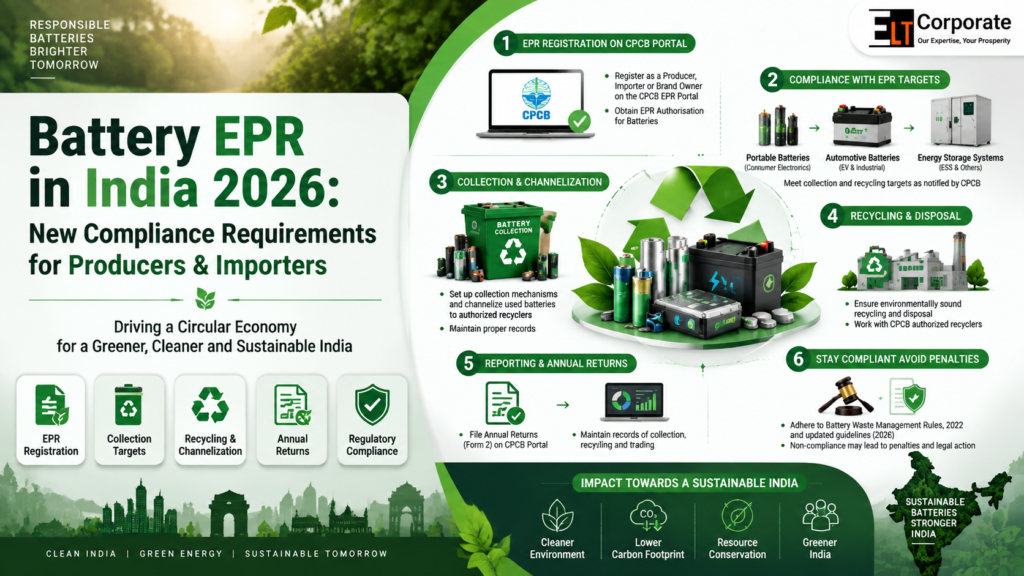
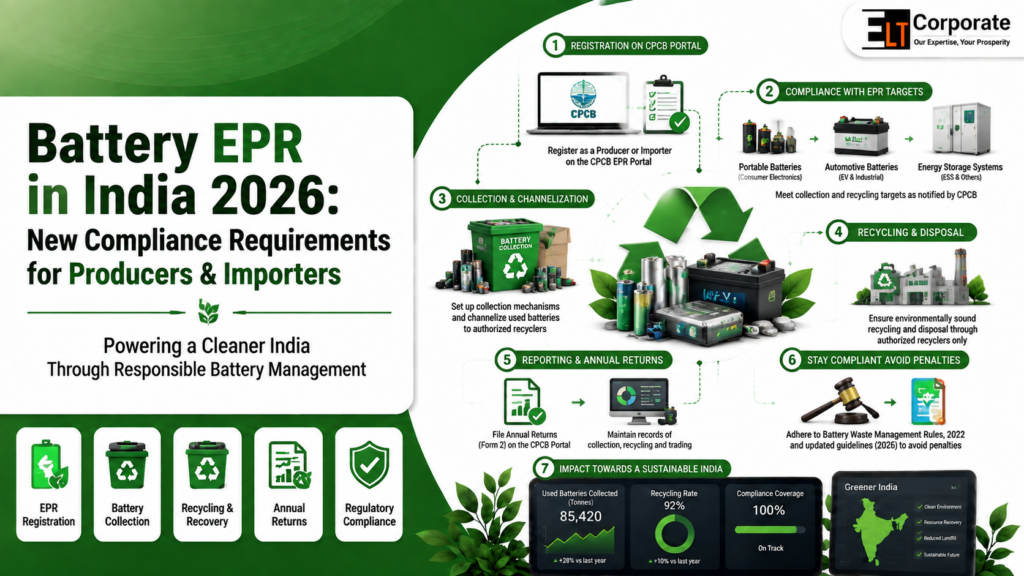
Businesses importing batteries or products covered by the applicable battery-waste framework may need to comply with Battery Waste Management Rules.
This can include businesses dealing with:
- Lithium-ion batteries
- Portable batteries
- Automotive batteries
- Industrial batteries
- EV-related batteries
- Other regulated battery categories
The exact obligation depends on the type and classification of the battery.
3. Importers Using Plastic Packaging
If an importer places products in regulated plastic packaging on the Indian market, Plastic Waste EPR requirements may become relevant.
Common examples include:
- FMCG products
- Packaged consumer goods
- Imported food products
- Cosmetics
- Personal-care products
- Other packaged products
The packaging material and category should be properly identified before determining the applicable EPR obligation.
4. Tyre Importers
Businesses importing tyres into India may also have obligations under the applicable tyre-waste EPR framework.
This can include importers of:
- New tyres
- Automotive tyres
- Industrial tyres
- Other covered tyre categories
Tyre importers need to maintain appropriate product and import records and comply with applicable recycling obligations.
EPR Registration Requirements for Importers
Before applying for EPR registration, an importer should prepare accurate information about both the business and the products being introduced into India.
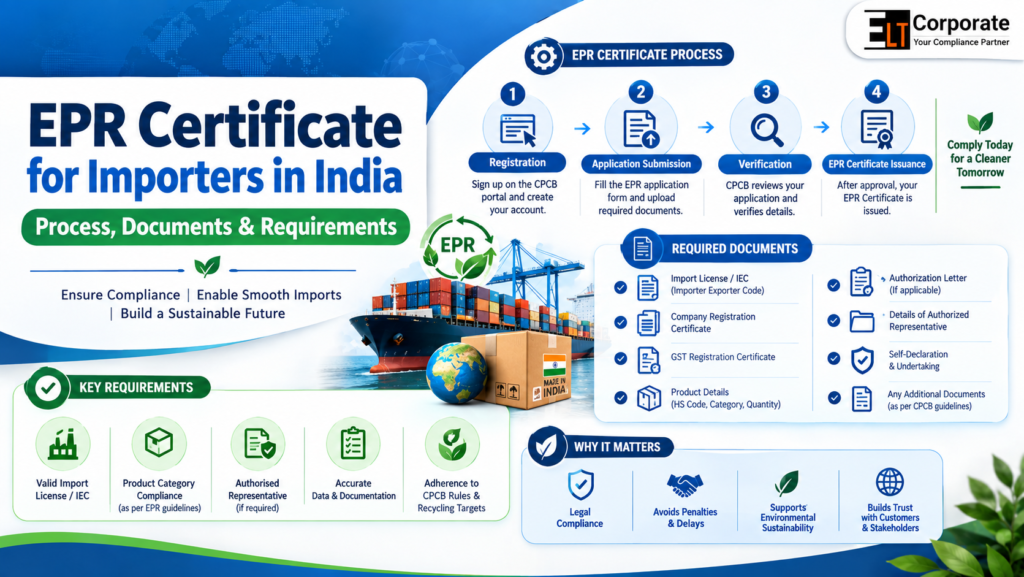
Some commonly required information/documents may include:
- Certificate of Incorporation or business registration proof
- PAN Card
- GST Registration Certificate
- Import Export Code (IEC)
- Authorized signatory details
- Company address proof
- Product details
- Product/category classification
- Import data
- Sales or quantity data, where applicable
- Brand details
- Packaging details, where applicable
- EPR management/compliance plan, where applicable
- Recycler/processor-related details or agreements, where required
- Undertakings/declarations in the prescribed format
Important: The exact documentation can vary depending on the applicable EPR category and current CPCB requirements.
EPR Certificate Registration Process for Importers
The registration process generally involves the following stages.
Step 1: Determine EPR Applicability
First, identify whether the imported product falls under an applicable EPR framework.
This is the most important step because incorrect classification can create problems later during registration and compliance reporting.
Step 2: Identify the Applicable Waste Category
Determine whether your business falls under:
- Plastic Waste EPR
- E-Waste EPR
- Battery Waste EPR
- Tyre Waste EPR
The compliance process and documentation can differ between categories.
Step 3: Prepare Business & Product Documents
Collect your business registration documents, GST, PAN, IEC, product information, import data and other documents applicable to your category.
Make sure the information is consistent across documents.
For example, the company name and registered address should not unnecessarily differ between GST, PAN, IEC and incorporation documents.
Step 4: Register on the Applicable CPCB EPR Portal
Eligible applicants are required to use the applicable CPCB online EPR system for registration and compliance.
The applicant needs to enter business information, product details and other required information according to the applicable category.
Step 5: Submit the Application
After entering the required information and uploading supporting documents, the application can be submitted for regulatory review.
Step 6: Respond to Queries, If Any
During scrutiny, the authority may raise queries or request clarification.
Incorrect information, missing documents or inconsistent product data can result in additional clarification requirements or delays.
Step 7: Obtain EPR Registration/Authorisation
Once the application is successfully reviewed and approved, the applicable EPR registration/authorisation is issued through the relevant system.
The importer must then continue meeting the applicable compliance and reporting obligations.
EPR Compliance After Registration
Obtaining an EPR registration is not the end of the compliance process.
Importers may have continuing responsibilities such as:
- Maintaining import and sales records
- Tracking products placed on the Indian market
- Meeting applicable EPR/recycling obligations
- Working with eligible recyclers/processors where required
- Maintaining supporting documentation
- Purchasing/using applicable EPR certificates or credits where required
- Filing applicable returns
- Keeping compliance records updated
The exact obligations depend on the waste category and applicable regulations.
Documents Importers Should Keep for EPR Compliance
Importers should maintain proper records rather than preparing documentation only when a return is due.
Useful records can include:
Business Records
- GST records
- PAN
- IEC
- Company registration documents
Import Records
- Bills of Entry
- Import invoices
- Product quantities
- Product descriptions
- Customs-related records
Product Records
- SKU/product details
- Category information
- Brand details
- Product quantity
- Packaging information, where applicable
EPR Records
- EPR registration details
- Recycling/processing certificates
- Recycler/processor agreements
- EPR certificate/credit records
- Return filing records
Proper record keeping can make future compliance and reporting considerably easier.
Common Mistakes Made by Importers During EPR Registration
Many EPR problems occur because businesses start the registration process without properly understanding their product category.
1. Applying Under the Wrong Category
An importer may assume that all products fall under the same EPR framework.
However, plastic packaging, electronic equipment, batteries and tyres can have different compliance requirements.
2. Incorrect Product Classification
Incorrect product/category mapping can affect registration and subsequent reporting.
3. Inconsistent Business Information
Differences between GST, PAN, IEC and company documents can create unnecessary queries.
4. Ignoring Packaging Details
For businesses importing packaged products, packaging information can be important for determining plastic-waste obligations.
5. Treating Registration as One-Time Compliance
EPR compliance can continue after registration through reporting, target fulfilment and record keeping.
6. Not Maintaining Import Data
Importers should maintain accurate quantity and product records so that compliance obligations can be calculated and reported correctly.
EPR Certificate vs EPR Compliance: What’s the Difference?
These two terms are often used interchangeably, but they should not be treated as exactly the same thing.
EPR registration/certificate relates to obtaining the applicable registration or authorisation.
EPR compliance is the broader ongoing responsibility of meeting applicable obligations after registration.
This can include:
- Maintaining records
- Meeting recycling obligations
- Working with eligible entities
- Filing returns
- Maintaining supporting documents
- Responding to regulatory requirements
Therefore, simply obtaining an EPR certificate does not mean that all future compliance obligations are automatically completed.
Why EPR Compliance Is Important for Importers
For importers, proper EPR compliance can help:
Avoid Regulatory Issues
Businesses can reduce the risk of non-compliance by identifying applicable requirements before placing regulated products on the market.
Maintain Business Continuity
Proper compliance processes can help prevent avoidable disruptions related to regulatory requirements.
Improve Documentation
A structured EPR system makes it easier to track imports, products, recycling obligations and returns.
Support Sustainable Business Practices
EPR encourages businesses to participate in responsible waste collection, recycling and resource recovery.
Build Customer & Brand Confidence
Demonstrating responsible environmental practices can support the credibility of businesses operating in increasingly sustainability-focused markets.
How Much Does EPR Registration Cost for Importers?
The cost of EPR registration can vary depending on several factors, including:
- EPR category
- Type of imported products
- Business structure
- Quantity of products placed on the market
- Applicable registration/processing requirements
- Compliance and recycling obligations
- Professional consultancy requirements
Therefore, there is no single fixed EPR certificate cost applicable to every importer.
Before estimating the total cost, the importer should first identify the applicable EPR category and compliance requirements.
How Long Does EPR Registration Take?
The registration timeline can vary depending on:
- Completeness of documents
- Accuracy of product information
- Correct category mapping
- Portal processing
- Regulatory queries
- Clarifications required from the applicant
Importers should therefore avoid planning their product launch or import operations around an assumed fixed approval timeline.
Starting the compliance process early can help reduce avoidable delays.
EPR Compliance for Importers: Checklist
Before starting your EPR registration, check the following:
☑ Identify your EPR category
☑ Check whether your imported product is covered
☑ Keep PAN and GST documents ready
☑ Keep IEC details ready
☑ Prepare product/SKU information
☑ Prepare import and sales data
☑ Identify packaging information where applicable
☑ Check applicable recycler/processor requirements
☑ Register through the applicable CPCB system
☑ Maintain records after registration
☑ Complete applicable EPR returns and compliance activities
How ELT Corporate Can Help With EPR Registration
EPR requirements can become complicated when an importer handles multiple products, brands, SKUs or waste categories.
ELT Corporate can assist businesses with the EPR registration and compliance process, including:
- EPR applicability assessment
- Documentation support
- Product/category identification
- Application preparation
- CPCB portal assistance
- Query/clarification support
- EPR compliance guidance
- Return filing support
The objective is to help importers understand their applicable obligations and maintain a structured compliance process.
Conclusion
For businesses importing regulated products into India, EPR compliance should be considered an important part of the overall import and market-entry strategy.
The first step is not simply applying for an EPR certificate. Importers should first determine the applicable waste category, understand their responsibilities, prepare accurate documentation and then complete the relevant registration process.
Whether your business deals with plastic packaging, electrical and electronic equipment, batteries or tyres, understanding your EPR obligations early can help reduce compliance risks and make ongoing reporting easier.
If you are unsure whether your imported products require EPR registration, it is advisable to assess the product category and applicable regulations before placing them on the Indian market.
Frequently Asked Questions
1. Is EPR registration mandatory for importers in India?
EPR registration can be mandatory for importers whose products or packaging fall within an applicable EPR framework. The requirement depends on the product category and applicable regulations.
2. What documents are required for EPR registration?
Common documents include PAN, GST, IEC, business registration documents, authorised signatory details and product/import information. Additional documents may be required depending on the EPR category.
3. Do importers need EPR registration for plastic packaging?
Importers placing products with regulated plastic packaging on the Indian market may have Plastic Waste EPR obligations, subject to the applicable rules and classification.
4. Do electronic goods importers need EPR registration?
Importers of covered electrical and electronic equipment may need E-Waste EPR registration under the applicable E-Waste Management framework.
5. Do battery importers require EPR registration?
Importers covered under the applicable Battery Waste Management framework may have EPR registration and compliance obligations.