The management of End-of-Life Vehicles (ELVs) is becoming more organised and technology-driven in India. With the introduction of the Environment Protection (End-of-Life Vehicles) Rules, 2025, producers and Registered Vehicle Scrapping Facilities need to maintain proper records, fulfil EPR obligations, and ensure that vehicles are processed through authorised channels.
Technology can make this entire process easier.
Digital portals, automated records, vehicle tracking systems, and online EPR certificate management can help businesses improve compliance and reduce errors.
What Is Digital Transformation in ELV Management?
Digital transformation in ELV management means using technology to manage and track vehicles that have reached the end of their useful life.
Instead of depending only on physical files and Excel sheets, businesses can maintain digital records relating to:
- Vehicle details
- Vehicle collection
- Scrapping status
- Registered Vehicle Scrapping Facility
- Material recovered
- EPR certificates
- Compliance targets
- Annual returns
This creates better visibility over the complete ELV management process.
Why Technology Is Important for EPR Compliance
EPR compliance can involve a large amount of vehicle and recycling data.
For automobile producers, manually managing this information can lead to mistakes.
Common problems may include:
- Incorrect vehicle data
- Missing records
- Duplicate entries
- Incorrect EPR calculations
- Certificate mismatches
- Delayed filing
- Difficulty in tracking pending obligations
A digital system can bring all relevant information into one place.
This helps the compliance team understand how much EPR obligation has been fulfilled and how much is still pending.
Role of the ELV EPR Portal
The ELV regulatory framework uses a centralised online portal for important compliance activities.
Producers and Registered Vehicle Scrapping Facilities are required to use the digital system for applicable registration and reporting requirements.
The portal also supports the EPR certificate mechanism.
This means businesses should ensure that their internal records properly match the information available on the regulatory portal.
If internal data and portal data are different, it may create problems during compliance verification or filing.
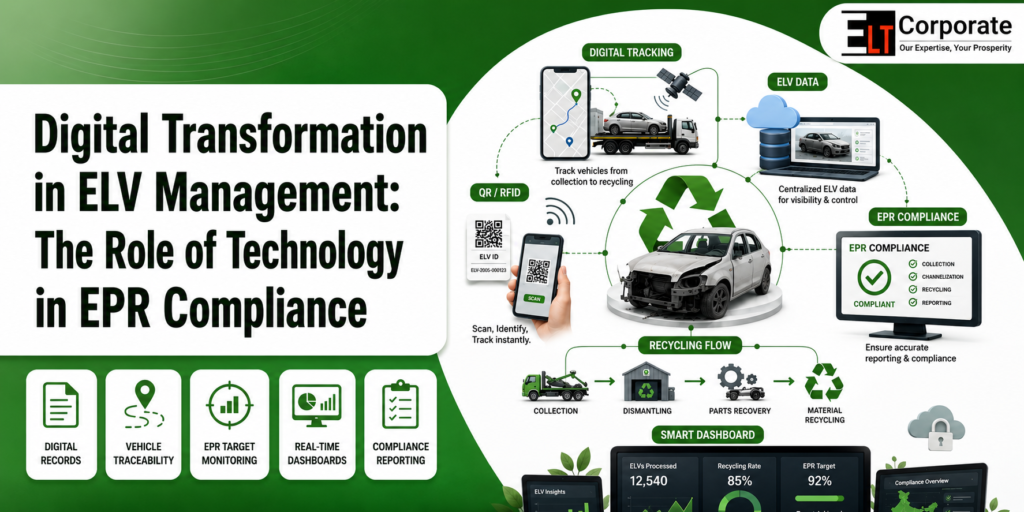
Digital Tracking of End-of-Life Vehicles
Technology can help create a proper digital record for every vehicle entering the ELV system.
For example, businesses may maintain:
- Registration number
- Chassis details
- Vehicle category
- Date of collection
- Date received by RVSF
- Scrapping details
- Material recovery details
- Supporting documents
This creates a clear trail showing what happened to the vehicle.
Digital tracking also makes it easier to check whether the vehicle has actually been processed through an authorised facility.
Managing EPR Certificates Digitally
EPR certificates are an important part of ELV compliance.
Producers should maintain proper records of certificates purchased and used for meeting their EPR obligations.
A digital system can help maintain details such as:
- Total EPR target
- Certificates purchased
- Certificate quantity
- RVSF details
- Certificates utilised
- Balance obligation
- Relevant financial year
This makes certificate reconciliation easier.
For example, if a producer has fulfilled only 70% of its EPR obligation, the system can immediately show that 30% is still pending.
The company can then take action before the compliance deadline.
How Technology Helps Registered Vehicle Scrapping Facilities
Registered Vehicle Scrapping Facilities handle several activities relating to ELVs.
They receive vehicles, carry out dismantling and scrapping activities, recover different materials, and maintain records.
Digital systems can help RVSFs track:
- Vehicles received
- Vehicles processed
- Steel scrap generated
- Other materials recovered
- Waste transferred to authorised entities
- EPR certificate records
- Supporting documents
This reduces dependence on manual registers and makes records easier to verify.
Benefits of Digital ELV Management
Digital transformation can provide several benefits to businesses involved in ELV compliance.
These include:
- Better vehicle traceability
- Accurate records
- Easier EPR target monitoring
- Better certificate management
- Reduced manual errors
- Faster document retrieval
- Easier reconciliation
- Better compliance monitoring
Most importantly, businesses can identify compliance gaps before they become serious problems.
Common Mistakes to Avoid
Technology can help with compliance, but businesses should not depend on software without proper verification.
Common mistakes include:
- Uploading incorrect vehicle information
- Not checking RVSF registration
- Failing to reconcile EPR certificates
- Maintaining incomplete supporting documents
- Not matching internal data with portal data
- Reviewing compliance only at the end of the year
Digital records should always be checked by the compliance team.
ELV Digital Compliance Checklist
Businesses should regularly check:
- Is vehicle data complete?
- Are RVSF records properly maintained?
- Is the EPR obligation correctly calculated?
- Are certificates properly recorded?
- Does internal data match portal records?
- Are supporting documents available?
- Is the pending EPR obligation being monitored?
- Are filings being completed on time?
Regular monitoring can prevent last-minute compliance issues.
Key Takeaway
Digital Transformation in ELV Management can make EPR compliance much easier to control.
Businesses should use technology to:
- Track vehicles
- Maintain proper records
- Monitor EPR targets
- Manage EPR certificates
- Reconcile portal data
- Identify compliance gaps early
However, technology should support compliance and not replace proper regulatory review.
Conclusion
Digital technology is becoming an important part of ELV management and EPR compliance.
As the End-of-Life Vehicle framework becomes more structured, producers and Registered Vehicle Scrapping Facilities need accurate records, proper vehicle traceability, and effective monitoring of EPR obligations.
Digital portals and compliance management systems can help businesses reduce errors, improve transparency, and maintain better control over their ELV responsibilities.
Companies that maintain accurate digital records and regularly monitor their EPR compliance will be better prepared to meet regulatory requirements.
Frequently Asked Questions (FAQs)
What is Digital Transformation in ELV Management?
Digital Transformation in ELV Management means using digital tools and systems to track End-of-Life Vehicles, maintain scrapping records, manage EPR certificates, and monitor compliance obligations more efficiently.
Why is technology important for ELV EPR compliance?
Technology helps businesses maintain accurate records, reduce manual errors, monitor EPR targets, track vehicles, and reconcile EPR certificates with portal records.
What is the role of the ELV EPR portal?
The ELV EPR portal provides a centralised digital system for registration, reporting, and management of EPR-related activities for producers and Registered Vehicle Scrapping Facilities.
How can digital systems help automobile producers?
Digital systems can help producers track their EPR obligations, monitor certificates purchased and utilised, maintain vehicle records, and identify pending compliance requirements.
How does technology help Registered Vehicle Scrapping Facilities?
Technology can help RVSFs maintain records of vehicles received, vehicles scrapped, materials recovered, steel scrap generated, and EPR certificate-related information.