
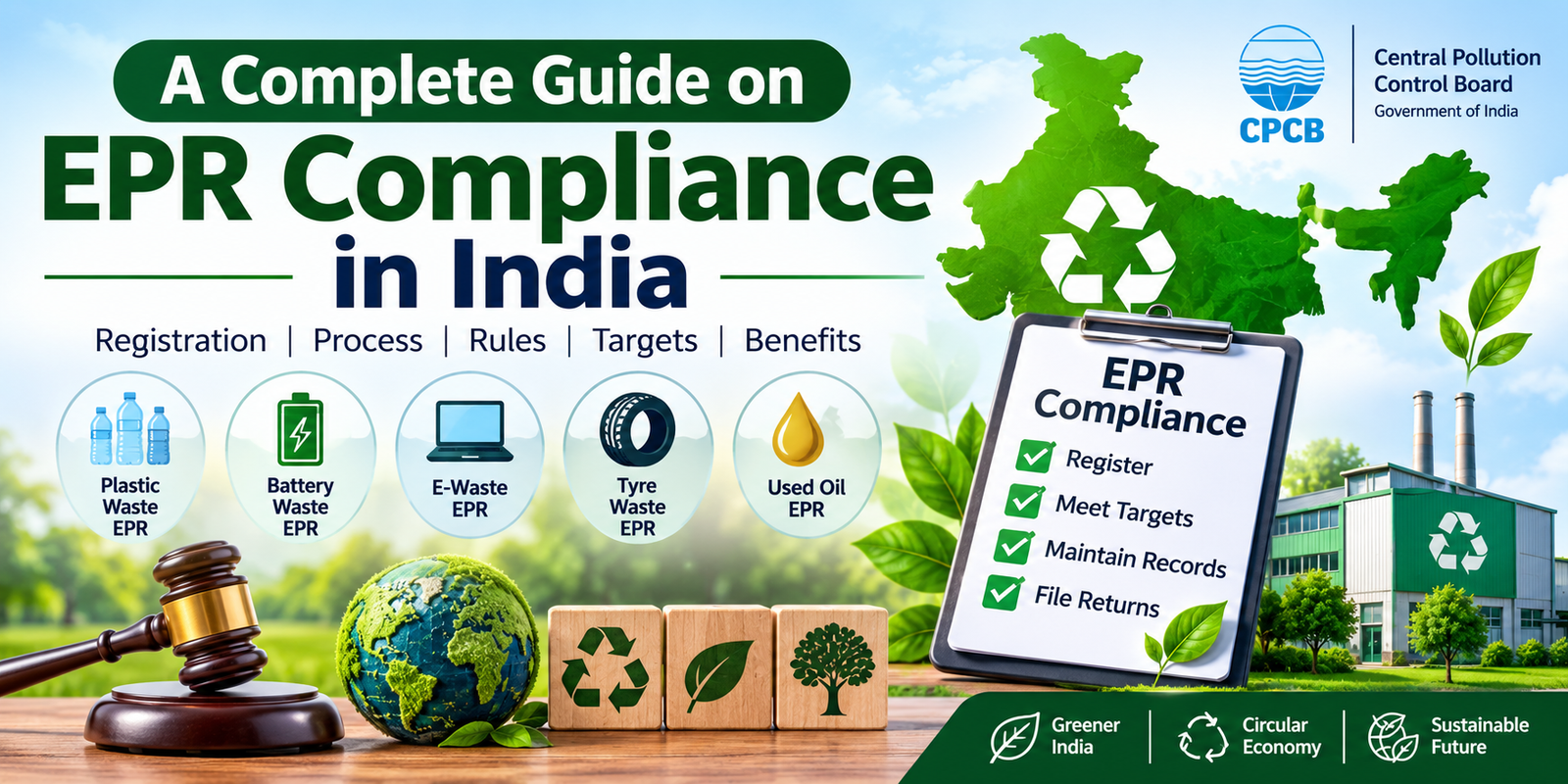
Environmental responsibility has become an important part of doing business in India. Companies manufacturing products, importing goods or selling products under their own brands are increasingly required to take responsibility for the waste generated after those products reach the end of their useful life.
To address this responsibility, the Government of India has introduced Extended Producer Responsibility (EPR) provisions under various waste management rules.
Today, EPR compliance covers several important waste categories, including plastic packaging, batteries, electrical and electronic equipment, waste tyres and used oil. Newer regulatory frameworks also address end-of-life vehicles and non-ferrous metal scrap.
For manufacturers, importers, brand owners and recycling businesses, understanding EPR requirements is essential to avoid regulatory issues and maintain environmental compliance.
This guide explains EPR compliance in India, who needs EPR registration, applicable rules, documents required, CPCB registration process, EPR certificates, recycling targets and ongoing compliance requirements.
1. What Is Extended Producer Responsibility (EPR)?
Extended Producer Responsibility (EPR) is an environmental policy approach under which producers are made responsible for the environmentally sound management of waste generated from products or packaging introduced into the market.
In simple words, a business cannot always consider its responsibility complete once a product is sold. Depending on the applicable EPR rules, it may also have to ensure that the waste generated from that product is collected, recycled, refurbished or otherwise processed through authorised channels.
For example:
- A company selling products in plastic packaging may have plastic waste EPR obligations.
- A company importing batteries may need Battery Waste EPR registration.
- A company manufacturing or importing covered electronic equipment may require E-Waste EPR registration.
- A tyre manufacturer may have obligations for waste tyre recycling.
- A lubricant or base oil producer may have Used Oil EPR obligations.
The purpose of EPR is to reduce environmental pollution, encourage recycling, improve waste traceability and promote a circular economy.
The Ministry of Environment, Forest and Climate Change (MoEF&CC) has introduced EPR provisions under different waste management rules, while the Central Pollution Control Board (CPCB) operates the relevant online registration and compliance systems.
2. EPR Rules and Regulations in India
EPR is not governed by one single law in India. Different waste categories are covered under separate rules and regulatory frameworks.
The major EPR-related regulations include:
| Waste Category | Applicable Rules / Framework |
|---|---|
| Plastic Packaging | Plastic Waste Management Rules, 2016 and amendments |
| Battery Waste | Battery Waste Management Rules, 2022 and amendments |
| E-Waste | E-Waste (Management) Rules, 2022 and amendments |
| Waste Tyres | Hazardous and Other Wastes (Management and Transboundary Movement) Rules, 2016, as amended |
| Used Oil | Hazardous and Other Wastes (Management and Transboundary Movement) Rules, 2016, as amended |
| End-of-Life Vehicles | Environment Protection (End-of-Life Vehicles) Rules, 2025 |
| Non-Ferrous Metal Scrap | Applicable EPR framework notified in 2025 |
The major frameworks for plastic, battery, e-waste, tyre and used oil have dedicated online EPR portals. The Government has also introduced newer frameworks for end-of-life vehicles and non-ferrous metal scrap.
It is important to identify the correct legislation before applying because the registration requirements, responsible authority, targets and compliance procedures differ across waste categories.
3. Types of EPR Compliance in India
Businesses should first identify the type of waste associated with their products or business activities.
The following are the major EPR categories in India.
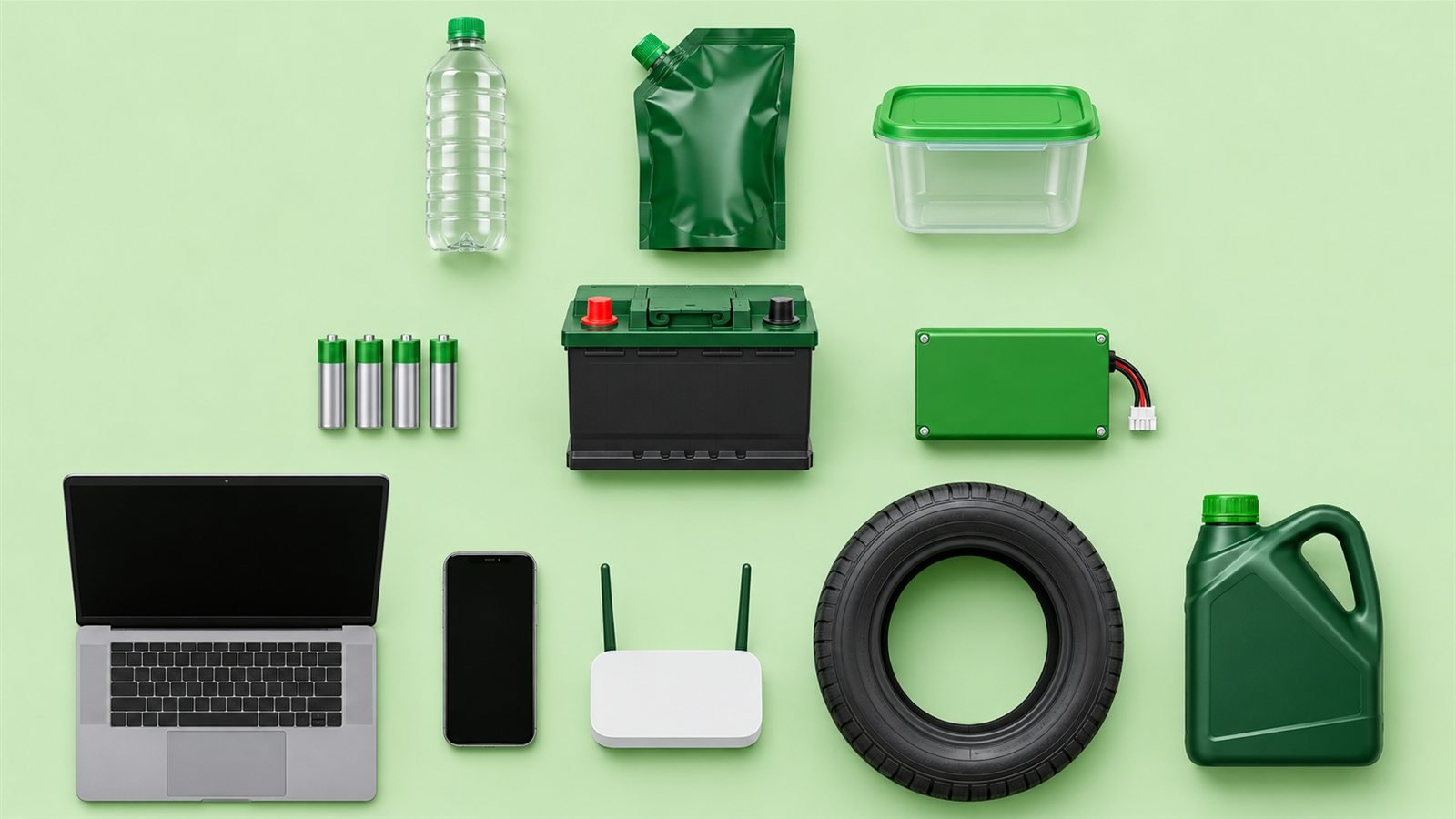
A. Plastic Waste EPR Registration
Plastic Waste EPR applies to specified producers, importers and brand owners dealing with plastic packaging.
Businesses that manufacture plastic packaging, import plastic packaging or sell products in plastic packaging under their own brands may need to assess their registration and compliance obligations.
The framework is governed by the Plastic Waste Management Rules, 2016, including the EPR guidelines introduced through amendments.
Who may require Plastic Waste EPR registration?
- Manufacturers of plastic packaging.
- Importers of plastic packaging.
- Importers of products packed in plastic packaging.
- Brand owners selling products in plastic packaging.
- Eligible plastic waste processors.
- Other notified categories, including specified manufacturers and importers of plastic raw materials.
Examples of covered packaging:
- Plastic bottles.
- Plastic containers.
- Flexible plastic packaging.
- Multilayer packaging.
- Plastic pouches and wrappers.
- Plastic packaging used for imported products.
Important compliance requirements:
- Registration of applicable PIBOs.
- Identification of plastic packaging categories.
- Reporting of packaging quantities.
- Fulfilment of applicable recycling and other EPR obligations.
- Use of eligible EPR certificates.
- Annual return filing.
- Maintenance of supporting records.
For PIBOs operating in more than two States/UTs, registration is generally handled through CPCB. Those operating in one or two States/UTs register with the concerned SPCB/PCC, subject to the applicable rules.
B. Battery Waste EPR Registration
Battery Waste EPR is governed by the Battery Waste Management Rules, 2022.
These Rules cover batteries regardless of their chemistry, shape, volume, weight, material composition or use.
The framework places EPR responsibilities on producers introducing batteries into the Indian market.
Who needs Battery EPR registration?
- Battery manufacturers.
- Battery importers.
- Businesses selling batteries under their own brand.
- Producers of portable batteries.
- Producers of electric vehicle batteries.
- Producers of automotive batteries.
- Producers of industrial batteries.
- Producers of other batteries covered by the Rules.
Examples of covered batteries:
- Lithium-ion batteries.
- Lead-acid batteries.
- Portable batteries.
- Electric vehicle batteries.
- Industrial batteries.
- Automotive batteries.
Important compliance requirements:
- CPCB EPR portal registration.
- Battery category identification.
- Reporting of battery production and import quantities.
- Fulfilment of applicable collection and recycling obligations.
- Use of eligible EPR certificates.
- Recycled material obligations, wherever applicable.
- Annual return filing.
Battery producers, recyclers and refurbishers are required to register through the prescribed CPCB online system. Recyclers and refurbishers also require registration with the concerned SPCB/PCC through the applicable system.
C. E-Waste EPR Registration
E-Waste EPR is governed by the E-Waste (Management) Rules, 2022.
These Rules apply to electrical and electronic equipment specified in Schedule I.
Businesses manufacturing, importing or selling covered electrical and electronic equipment under their own brands may fall within the definition of a producer.
Who needs E-Waste EPR registration?
- Manufacturers of covered electronic equipment.
- Importers of electronic products.
- Brand owners selling covered equipment.
- Companies selling outsourced-manufactured equipment under their own brand.
Examples of covered electronic equipment:
- Computers and laptops.
- Mobile and telecommunication equipment.
- Televisions.
- Refrigerators.
- Air conditioners.
- Washing machines.
- Medical equipment included in Schedule I.
- Monitoring and control instruments.
- Other notified electrical and electronic equipment.
Important compliance requirements:
- Producer registration on the CPCB E-Waste Portal.
- Correct EEE category and code selection.
- Submission of production, import and sales data.
- Calculation of applicable recycling targets.
- Purchase of eligible EPR certificates.
- Quarterly returns.
- Annual returns.
Registration is not the end of the compliance process. Producers must continue meeting their applicable recycling obligations.
D. Waste Tyre EPR Registration
Waste Tyre EPR is implemented under the Hazardous and Other Wastes (Management and Transboundary Movement) Rules, 2016, as amended.
The framework covers specified producers, recyclers and retreaders.
Who needs Waste Tyre EPR registration?
- Manufacturers selling new tyres domestically.
- Businesses selling new tyres under their own brands.
- Importers of new tyres.
- Importers of vehicles fitted with new tyres, as covered under the Rules.
- Automobile manufacturers importing new tyres for vehicles sold domestically.
- Importers of waste tyres.
- Eligible waste tyre recyclers and retreaders.
Examples of covered products:
- Passenger vehicle tyres.
- Commercial vehicle tyres.
- Two-wheeler tyres.
- Three-wheeler tyres.
- Other tyres covered under the notified framework.
Important compliance requirements:
- Registration on the CPCB Waste Tyre EPR Portal.
- Declaration of production, import and sales information.
- Calculation of annual EPR obligations.
- Procurement of eligible recycling or retreading certificates.
- Compliance with prescribed targets.
- Maintenance of records and applicable returns.
E. Used Oil EPR Registration
Used Oil EPR was introduced through the Hazardous and Other Wastes (Management and Transboundary Movement) Second Amendment Rules, 2023, effective from 1 April 2024.
The framework is intended to ensure the proper collection, recycling and re-refining of used oil.
Who needs Used Oil EPR registration?
- Producers of base oil.
- Producers of lubrication oil.
- Importers falling within the producer definition.
- Importers of used oil.
- Used oil recyclers.
- Collection agents.
Examples of relevant products and activities:
- Base oil.
- Lubricating oil.
- Imported lubrication oil.
- Used oil import for permitted re-refining.
- Used oil recycling and collection.
Important compliance requirements:
- Registration under the applicable stakeholder category.
- Submission of production and import data.
- Reporting of domestic sales quantities.
- Calculation of EPR obligations.
- Procurement or transfer of eligible EPR certificates.
- Compliance with annual targets.
- Maintenance of supporting documents.
F. EPR for End-of-Life Vehicles
The Environment Protection (End-of-Life Vehicles) Rules, 2025 introduced an EPR framework for the environmentally sound management of end-of-life vehicles.
This framework is relevant to the vehicle manufacturing and authorised vehicle-scrapping ecosystem.
It addresses responsibilities relating to the management, dismantling and recycling of end-of-life vehicles through the prescribed regulatory system.
Businesses operating in this sector should examine the applicability of the 2025 Rules, including the responsibilities assigned to vehicle manufacturers and registered vehicle scrapping facilities.
G. EPR for Non-Ferrous Metal Scrap
India has also introduced an EPR framework for scrap of non-ferrous metals in 2025.
This framework is relevant to notified stakeholders dealing with specified non-ferrous metals and their scrap, including the recycling and recovery of valuable materials.
The exact applicability, registration categories and obligations should be determined from the relevant notified framework rather than assuming that every metal trader or scrap dealer automatically requires EPR registration.
4. Who Needs EPR Registration in India?
EPR registration is generally required for entities specifically covered under the applicable waste management rules.
Depending on the waste category, the following businesses may need to register:
| Business Category | Possible EPR Applicability |
|---|---|
| Plastic packaging manufacturer | Plastic Waste EPR |
| Importer of plastic-packaged goods | Plastic Waste EPR |
| Brand owner using plastic packaging | Plastic Waste EPR |
| Battery manufacturer | Battery Waste EPR |
| Battery importer | Battery Waste EPR |
| Electronics manufacturer | E-Waste EPR |
| Electronics importer | E-Waste EPR |
| Tyre manufacturer | Waste Tyre EPR |
| Tyre importer | Waste Tyre EPR |
| Lubricant manufacturer | Used Oil EPR |
| Base oil importer | Used Oil EPR |
| Used oil recycler | Used Oil EPR |
| Waste tyre recycler | Waste Tyre EPR |
| Battery recycler | Battery Waste EPR |
| Electronic waste recycler | E-Waste EPR |
EPR applicability is based on the definitions, exclusions and conditions in the relevant rules. Merely manufacturing, importing or selling a product does not automatically mean that every EPR framework applies to that business.
An importer of electronic equipment may require E-Waste EPR registration, whereas the battery incorporated into that equipment may need to be assessed separately under the Battery Waste Management Rules.
5. Why Is EPR Registration Required?
EPR registration is important for businesses because it establishes their compliance status under the relevant environmental regulations.
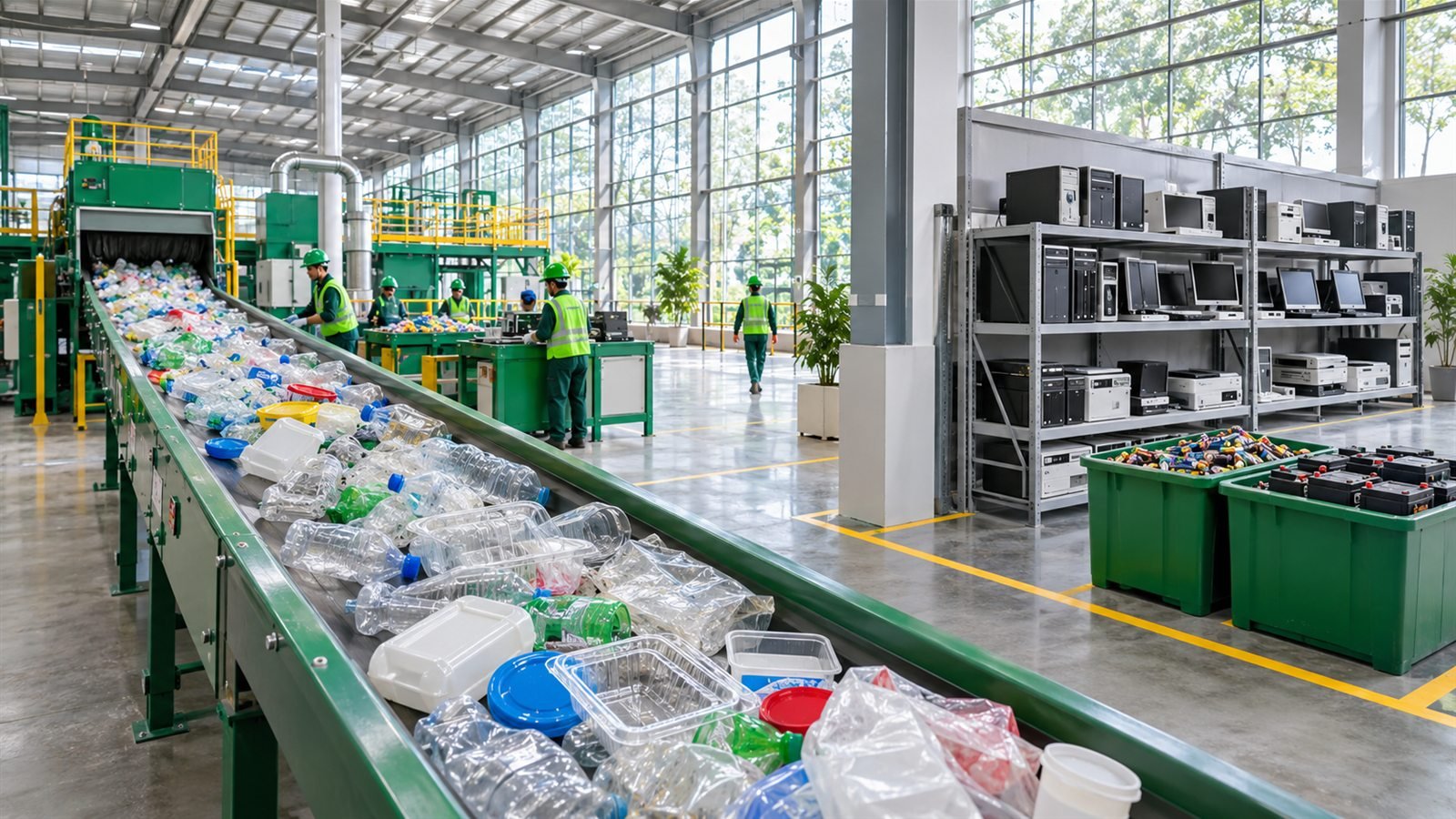
The major purposes include:
1. Environmental Protection
EPR promotes proper collection, recycling and processing of waste instead of uncontrolled dumping or disposal.
2. Legal Compliance
Businesses covered by EPR provisions must fulfil the applicable registration and reporting requirements.
3. Recycling and Resource Recovery
EPR encourages the recovery of valuable materials from waste products and packaging.
4. Traceability
The online portal system helps track production, imports, sales, recycling activities and EPR certificate transactions.
5. Circular Economy
EPR supports the reuse of resources and reduces dependence on virgin raw materials.
6. Reduction of Regulatory Risk
Proper registration, documentation and target fulfilment help businesses reduce the risk of environmental compensation and enforcement action.
6. Documents Required for EPR Registration in India
The documents required depend on the waste category and applicant type. A plastic packaging producer may have different documentation requirements from a battery importer or an e-waste recycler.
However, businesses should generally prepare the following information.

A. Basic Company Documents
- PAN Card of the company or entity.
- GST Registration Certificate.
- Certificate of Incorporation, where applicable.
- CIN details, where applicable.
- Udyam Registration, wherever relevant.
- Registered office address proof.
- Business constitution details.
- Official email ID.
- Contact number.
B. Authorised Signatory Documents
- Name of authorised person.
- Designation.
- PAN or other prescribed identity details.
- Contact number.
- Official email ID.
- Board resolution or authorisation letter, where required.
C. Import-Related Documents
For importers, additional documents may include:
- Import Export Code (IEC).
- Import details.
- Customs documents.
- Product descriptions.
- Import quantity records.
- Product-wise classification.
D. Product and Packaging Details
Depending on the category, the following may be required:
- Product list.
- Brand names.
- EEE codes.
- Battery chemistry and category.
- Plastic packaging category.
- Tyre category.
- Oil product details.
- Product photographs or labels, wherever required.
E. Manufacturing and Sales Information
- Manufacturing details.
- Production capacity.
- Year-wise production data.
- Domestic sales data.
- Import data.
- Export data.
- Packaging or product quantities.
- Previous financial-year records.
F. Recycler-Specific Documents
For waste processing entities, the requirements may additionally include:
- Consent to Establish (CTE), wherever applicable.
- Consent to Operate (CTO), wherever applicable.
- Hazardous waste authorisation, where applicable.
- Plant and machinery details.
- Recycling or processing capacity.
- Manufacturing process.
- Plant layout.
- Photographs of the facility.
- Details of installed equipment.
- Pollution control arrangements.
- Other documents prescribed by the relevant SPCB/PCC and CPCB.
G. Declarations and Undertakings
Depending on the category and portal, applicants may need:
- Covering letter.
- Declaration of correctness of information.
- Undertaking.
- Authorisation documents.
- Category-specific declarations.
Document Checklist — Applicants should always follow the latest CPCB/SPCB Standard Operating Procedure (SOP). The above list is a general preparation checklist, not a universal mandatory document list for every EPR category.
7. EPR Registration Process in India
Although the process differs across waste categories, the general registration procedure can be understood through the following stages.
Step 1: Identify EPR Applicability
The first step is to determine whether the business falls within the definition of an obligated entity under the relevant rules.
Identify:
- Nature of business.
- Product category.
- Manufacturing or import activity.
- Brand ownership.
- Waste category.
- Applicable exclusions.
Step 2: Identify the Correct EPR Category
Select the appropriate waste category, such as:
- Plastic Packaging.
- Battery Waste.
- E-Waste.
- Waste Tyre.
- Used Oil.
- Other applicable notified waste streams.
Incorrect classification can result in application queries or incorrect EPR obligations.
Step 3: Prepare Required Documents
Collect the company documents, product details, import records, manufacturing data and other supporting information.
Check that the legal name, PAN, GST and registered address are consistent.
Step 4: Access the Relevant EPR Portal
The applicant must access the appropriate online portal and select the applicable stakeholder category.
For example:
- Plastic Waste EPR Portal.
- Battery Waste EPR Portal.
- E-Waste EPR Portal.
- Waste Tyre EPR Portal.
- Used Oil EPR Portal.
The CPCB Common EPR Single Sign-On (SSO) system also provides access to the relevant EPR portals.
Step 5: Create an Account
Register using the appropriate business and authorised person details.
Businesses should use their own dedicated official email ID and mobile number as required by the portal.
Step 6: Fill in the Application
Enter the required information, including:
- Company details.
- Product details.
- Manufacturing details.
- Import details.
- Sales information.
- Waste category.
- Historical data.
- Authorised person information.
Step 7: Upload Documents
Upload the prescribed documents in the specified format and size.
Step 8: Submit the Application
Review all information before submitting the application.
Incomplete or inconsistent applications may result in queries.
Step 9: Respond to Regulatory Queries
The concerned authority may seek clarification or additional documents.
The applicant should respond with accurate information and supporting records.
Step 10: Obtain Registration
After satisfactory review, the registration is granted through the relevant regulatory system.
The applicant should download and preserve the registration certificate and note any conditions attached to it.
Step 11: Start Ongoing EPR Compliance
After registration, the business must monitor its EPR obligations, maintain records, obtain eligible certificates where required and complete applicable returns.
8. What Is an EPR Certificate?
An EPR Certificate is a regulatory certificate or credit generated under the applicable EPR mechanism to recognise eligible waste processing or recycling activity.
Under the relevant frameworks, registered recyclers or other eligible waste processors generate certificates through the prescribed portal.
These certificates are then used by obligated producers to fulfil their applicable EPR obligations.
The mechanism generally works as follows:
- Producer introduces products into the market
- EPR obligation is determined
- Waste is collected and processed by an eligible registered entity
- EPR Certificate is generated
- Certificate is transferred or purchased through the prescribed portal
- Producer uses the certificate against the applicable EPR obligation
The exact certificate mechanism differs across waste categories. For example, battery, e-waste, tyre, plastic packaging and used oil certificates are governed by their respective rules and portal procedures.
Obtaining a registration certificate and fulfilling an annual EPR obligation are two separate compliance activities.
9. What Are EPR Targets?
EPR targets are the prescribed obligations that an entity must meet under the relevant waste management rules.
These targets may relate to:
- Collection of waste.
- Recycling of waste.
- Reuse.
- Refurbishment.
- Recovery of materials.
- Use of recycled content.
- Environmentally sound processing.
The applicable target depends on the waste category, stakeholder type, financial year, historical sales or imports and other conditions under the relevant rules.
For example:
| Waste Category | Nature of EPR Obligation |
|---|---|
| Plastic Packaging | Processing obligations, including recycling and other prescribed end-of-life routes |
| Battery Waste | Collection and recycling/refurbishment obligations and recycled-content requirements, as applicable |
| E-Waste | Recycling targets based on prescribed historical sales and product life |
| Waste Tyre | Recycling or retreading obligations under the applicable framework |
| Used Oil | Recycling obligations based on relevant historical sales/import data |
| End-of-Life Vehicles | Obligations under the notified ELV framework |
A business should not use the target of one waste category to calculate its liability under another category.
10. Annual Returns and Ongoing EPR Compliance
EPR registration is not a one-time activity.
Businesses must continue to fulfil their applicable compliance responsibilities after receiving registration.
Depending on the relevant rules, the obligations may include:
A. Quarterly Returns
Certain EPR frameworks require periodic quarterly reporting through the online portal.
The business should report the relevant manufacturing, import, sales or processing information within the prescribed timeline.
B. Annual Returns
Annual returns are an important part of EPR compliance.
The applicant may be required to report:
- Total production.
- Total imports.
- Domestic sales.
- Export quantities.
- Packaging or product quantities.
- Waste generated.
- Waste recycled.
- EPR certificates obtained.
- Target fulfilment.
- Other prescribed details.
C. EPR Certificate Procurement
Where the framework requires certificate-based fulfilment, the obligated entity must procure eligible certificates from authorised registered entities through the prescribed system.
D. Maintenance of Records
Businesses should maintain:
- Purchase invoices.
- Sales invoices.
- Import records.
- Production records.
- Product classification records.
- Recycling certificates.
- Portal acknowledgements.
- Annual return records.
- Supporting declarations.
E. Registration Amendment
Changes in business details, authorised signatory, address, products or other registered information should be updated through the prescribed amendment mechanism wherever applicable.
11. Which Authority Grants EPR Registration in India?
The regulatory authority and registration process depend on the applicable waste category.
The Central Pollution Control Board (CPCB) plays a major role in implementing and monitoring the EPR framework.
State Pollution Control Boards (SPCBs) and Pollution Control Committees (PCCs) also have responsibilities under the applicable rules, particularly for verification and registration of waste processors and specified local-level stakeholders.
For example:
- Plastic PIBOs operating in more than two States/UTs generally register with CPCB, while those operating in one or two States/UTs register with the relevant SPCB/PCC.
- Battery producers register through the CPCB portal, while recyclers and refurbishers also require the applicable SPCB/PCC registration.
- E-waste producers register through the CPCB EPR portal.
- Waste tyre and used oil stakeholders follow their respective portal-based registration frameworks.
Therefore, applicants should identify the correct authority before initiating the application.
12. Common Reasons for EPR Registration Queries or Rejection
Businesses may face regulatory queries due to incomplete information or incorrect classification.
Some common issues include:
1. Incorrect Product Classification
Selecting the wrong EEE code, battery category, plastic packaging category or other waste classification.
2. Mismatch in Company Details
Differences between PAN, GST, IEC, incorporation documents and portal information.
3. Incorrect Historical Data
Incorrect production, sales, import or export quantities.
4. Missing Documents
Failure to upload the required declarations, authorisations or supporting records.
5. Incorrect Stakeholder Category
Applying as a producer when the business falls under a different category, or vice versa.
6. Incomplete Recycling Information
Waste processors may face queries regarding plant capacity, machinery, permissions or operational details.
7. Ignoring Annual Compliance
Some businesses obtain registration but fail to monitor their ongoing EPR obligations.
8. Using Unregistered Waste Processors
Certificates obtained outside the prescribed regulatory mechanism may not be eligible for EPR fulfilment.
13. Penalties for EPR Non-Compliance in India
Failure to comply with applicable EPR requirements can lead to regulatory action.
Depending on the waste category and nature of the violation, consequences may include:
- Environmental Compensation.
- Directions for corrective action.
- Regulatory inspection.
- Audit of records.
- Suspension or cancellation of registration, where authorised.
- Action for submission of false information.
- Other proceedings under the applicable environmental legislation.
The Environment (Protection) Act, 1986 and the relevant waste management rules provide the legal framework for enforcement.
It is important to understand that Environmental Compensation is not necessarily a single fixed amount applicable to all EPR violations. The calculation and consequences depend on the applicable rules, guidelines and facts of the case.
Businesses should therefore maintain proper records and ensure that their EPR obligations are fulfilled within the prescribed timelines.
14. Common Mistakes Businesses Make in EPR Compliance
Some businesses assume that obtaining an EPR registration certificate completes their environmental compliance. This is not correct.
The following mistakes should be avoided:
- Not checking whether the product falls under the relevant EPR rules.
- Ignoring imported packaging or imported products.
- Not identifying the correct producer or brand owner.
- Using incorrect product categories.
- Failing to maintain historical sales data.
- Not calculating annual EPR obligations.
- Purchasing certificates without checking recycler registration.
- Missing applicable quarterly or annual returns.
- Ignoring registration amendment requirements.
- Assuming one EPR registration covers every waste category.
A company may require more than one EPR registration if it deals with products or packaging covered under different waste management rules.
An electronics company importing products in plastic packaging that contain batteries may need to independently assess its obligations under the Plastic Waste, E-Waste and Battery Waste frameworks.
15. Benefits of Proper EPR Compliance
A well-managed EPR compliance system offers several benefits.
- Regulatory Compliance: Helps businesses fulfil their obligations under applicable environmental rules.
- Better Waste Management: Encourages responsible collection, recycling and processing.
- Improved Traceability: Creates records of products introduced into the market and the waste processing activities used to meet obligations.
- Reduced Regulatory Risk: Helps avoid non-compliance and potential environmental compensation.
- Sustainability: Supports resource recovery, recycling and circular economy initiatives.
- Business Reputation: Demonstrates environmental responsibility to customers, partners and other stakeholders.
- Operational Planning: Helps businesses monitor their annual targets and avoid last-minute compliance issues.
16. How ELT Corporate Can Assist With EPR Registration and Compliance
EPR compliance involves more than submitting an online application. Businesses need to identify the correct waste category, assess regulatory applicability, prepare documents, calculate obligations and maintain ongoing compliance.
ELT Corporate provides regulatory consulting and compliance assistance for businesses dealing with different waste categories in India.
Our EPR-related assistance includes:
- EPR applicability assessment.
- CPCB EPR registration.
- Plastic Waste EPR registration.
- Battery Waste EPR registration.
- E-Waste EPR registration.
- Waste Tyre EPR registration.
- Used Oil EPR registration.
- Product and waste category identification.
- Document preparation and review.
- Application filing assistance.
- CPCB/SPCB query handling.
- EPR target assessment.
- EPR certificate compliance.
- Quarterly and annual return assistance.
- Registration amendment.
- Ongoing regulatory compliance support.
Whether you are a manufacturer, importer, brand owner or waste processing entity, understanding your EPR obligations at the right stage can help avoid unnecessary regulatory complications.
For assistance with EPR registration and compliance in India, businesses can connect with ELT Corporate for an applicability assessment and regulatory guidance.
17. Conclusion
EPR Compliance in India has become an important part of environmental and product regulatory compliance for manufacturers, importers, brand owners and waste processors.
The Government has introduced different EPR frameworks for plastic packaging, batteries, electronic waste, waste tyres and used oil, along with newer regulatory frameworks for other waste streams.
Each category has its own registration requirements, documentation, recycling targets, certificate mechanism and reporting obligations.
Businesses should therefore:
- identify the applicable EPR rules;
- determine their stakeholder category;
- obtain the required registration;
- maintain accurate production, import and sales data;
- fulfil applicable EPR targets;
- use eligible EPR certificates where required;
- file prescribed returns; and
- maintain proper compliance records.
EPR should not be treated as a one-time registration requirement. It is an ongoing environmental responsibility that must be integrated into the business’s regular compliance system.
With proper planning and regulatory assistance, businesses can manage their EPR obligations efficiently while contributing to India’s transition towards a circular economy.
Frequently Asked Questions (FAQs) on EPR Compliance in India
EPR compliance refers to fulfilling the environmental responsibilities imposed on specified producers, importers, brand owners and other stakeholders under applicable waste management rules. It may include registration, waste processing, recycling targets, certificate transactions and return filing.
EPR registration is mandatory for entities covered under the relevant EPR rules. The applicability depends on the product, waste category, business activity and stakeholder definition.
Depending on the waste category, manufacturers, importers, brand owners, producers, recyclers, refurbishers, retreaders and collection agents may require registration.
Products and packaging covered under the applicable EPR frameworks include plastic packaging, batteries, specified electrical and electronic equipment, tyres and products covered under the Used Oil framework.
The major operational EPR categories include Plastic Waste, Battery Waste, E-Waste, Waste Tyre and Used Oil. Newer frameworks also address end-of-life vehicles and non-ferrous metal scrap.
CPCB EPR registration refers to registration through the Central Pollution Control Board’s prescribed online system under the relevant environmental rules. Depending on the waste category and business activity, the concerned SPCB/PCC may also have a registration or verification role.
Common documents include PAN, GST certificate, incorporation details, IEC for applicable importers, authorised signatory details, product information, production or sales data and category-specific declarations.
The general process includes applicability assessment, stakeholder identification, document preparation, portal registration, application submission, regulatory scrutiny, query resolution and grant of registration.
An EPR Certificate is generated under the applicable EPR mechanism to recognise eligible recycling or waste processing activity. It may be transferred or purchased through the prescribed portal for fulfilment of an obligated entity’s EPR liability.
Registration is the initial requirement, but businesses must also comply with applicable ongoing obligations, including reporting, recycling targets, certificate procurement and return filing.
No. Different waste categories are governed by separate rules and registration systems. A business dealing with multiple regulated waste streams may need separate registrations.
Yes, importers may need EPR registration when they fall within the producer or importer definitions under the applicable rules. Imported packaging and batteries incorporated into imported products should also be assessed under their respective frameworks.
Brand owners may require registration where they fall within the relevant EPR framework, particularly for plastic packaging and covered electrical and electronic equipment.
CPCB plays a central role in implementing EPR frameworks, operating online portals, granting or administering registrations under applicable rules, monitoring obligations and overseeing certificate-related systems.
SPCBs and PCCs perform functions assigned under the relevant rules, including verification, consent-related matters and registration of specified waste processors and other stakeholders.