
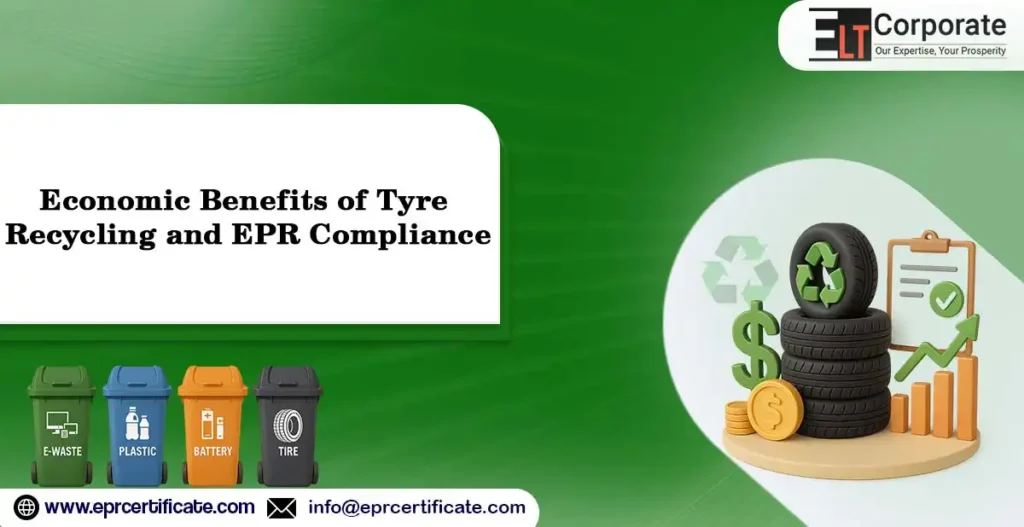
The Benefits of Tyre Recycling global tire industry is moving beyond simple disposal and moving towards profitable recycling models. Not every rejected tire is only waste – it is a possible source of fuel, raw materials and economic value. With extended manufacturer responsibility EPR compliance being mandatory, businesses can now align environmental stability with financial benefits.
The guide suggests that tire recycling and EPR compliance are turning waste into money to unlock opportunities for 2025 and beyond businesses.
Why Tyre Recycling is an Economic Opportunity
- High price recovery – tires contain steel, carbon black and oil, which can be reused in many industries.
- Growing market demand-order-sequences are found in rubber, tires-transported oils, and devulcanized rubber constructions, energy and manufacturing applications.
- Cost Savings for Producers – Recycling reduces dependence on expensive virgin raw materials.
- Regulatory push – EPR of CPCB invests in recycling manufacturers and importers to create an organized market.
Key Economic Benefits of Tyre Recycling & EPR
1. Revenue Generation from By-Products
- Tyre-Derived Oil (TDO): Used as an alternative to furnace oil in power plants and industries.
- Crumb Rubber: Increasingly used in road construction, sports turf, and molded products.
- Steel & Gas Recovery: Steel wires and pyro-gas from tyres generate steady revenue streams.
2. Job Creation & Industrial Growth
- Recycling plants and reverse logistics networks generate employment at multiple levels.
- The EPR framework encourages private investment in recycling infrastructure.
3. Cost Efficiency for Manufacturers
- Replacing virgin raw materials with recycled rubber reduces production costs.
- Importers complying with EPR avoid heavy penalties and disruptions in supply chain.
4. Contribution to Circular Economy
- Recycled tyres become inputs for new tyres, footwear, mats, conveyor belts, and molded goods.
- Closed-loop systems reduce dependence on imports and support “Make in India.”
5. Investment & ESG Advantages
- Businesses with strong recycling and compliance systems attract green financing and ESG investors.
- Sustainability branding increases consumer trust and market competitiveness.
Predictions for Economic Growth Beyond 2025
- 2026–2027 – EPR credits may become tradeable, creating a new financial market.
- 2028–2030 – Tyre recycling will contribute significantly to India’s renewable fuel economy.
- 2030 and Beyond – Export of recycled products like crumb rubber and devulcanized rubber will strengthen India’s global recycling industry.
Compliance Roadmap for Businesses
To maximize both profitability and compliance, companies should:
- Get EPR Authority and submit returns on time.
- Build a partnership with authorized recycles for the revenue-sharing model.
- Develop reverse logistics systems with dealers and transport hubs.
- Explore pyrolysis, cryogenic and devulkinization technologies for high yields.
- Showcase ECO-Lable and ESG reports to attract investors and customers.
Why Partner with ELT Corporate?
At ELT Corporate, we help you turn regulatory compliance into business opportunity:
- EPR Registration and Advisor – Spontaneous compliance with CPCB and SPCB.
- Guidance on how to mash products such as economic adaptation-TDO, serpent rubber and steel.
- Recycling network tie-ups with access-authorized pyrolysis and cryogenic recycles.
- Legal and documentation support – handling audit, renewal and reporting.
- Strategy prepared for the future-ESG, carbon credit and circular economy integration.
Frequently Asked Questions (FAQs)
Q1. What is the economic benefit of tyre recycling?
The tire recycling generates revenue from products such as tire-type oil, steel, serb rubber and carbon black. These materials are reused in energy, manufacturing and manufacturing industries, reducing costs and new income currents.
Q2. How does EPR compliance help tyre manufacturers and importers?
EPR ensures that tire growers and importers installed a system for collection, recycling and disposal. Compliance not only avoids punishment, but also allows businesses to benefit from organized recycling networks and green branding.
Q3. What are the major by-products of tyre recycling?
The key by-products include:
- Tyre-Derived Oil (TDO) – used as industrial fuel
- Crumb Rubber – used in roads, sports fields, and molded goods
- Steel – recovered from tyres and sold as scrap
- Carbon Black Substitute – reused in manufacturing
Q4. Is tyre recycling profitable in India?
Yes. With government-backed EPR rules, rising demand for recycled materials, and the growing renewable energy sector, tyre recycling is becoming a profitable business model in India.
Conclusion
Tire recycling is no longer an environmental obligation – this is an opportunity for a profitable industry. By aligning with EPR compliance, businesses can save costs, unlock new revenue currents, and strengthen their stability credentials.
By partnering with ELT corporate, your business can convert tire waste into money, remain obedient, and can grow in India’s rapidly developed circular economy.
![What Is EPR Annual Compliance? [Importance, Documents & Procedure]](https://eprcertificate.com/wp-content/uploads/2026/04/web-eprt-blog-1-1-300x155.jpg)
![What Is EPR Annual Compliance? [Importance, Documents & Procedure]](https://eprcertificate.com/wp-content/uploads/2026/03/web-eprt-blog-300x155.webp)

![What Is EPR Annual Compliance? [Importance, Documents & Procedure]](https://eprcertificate.com/wp-content/uploads/2026/04/web-eprt-blog-1-1-1024x527.jpg)
![What Is EPR Annual Compliance? [Importance, Documents & Procedure]](https://eprcertificate.com/wp-content/uploads/2026/03/web-eprt-blog-1024x527.webp)