Today, one of the world’s biggest environmental problems is plastic waste. Pyrolysis of plastic waste has become a viable option to convert non-fuel plastic into useful chemicals and fuel for individual recycling processes. This article explains the concept of pyrolysis, its process, documentation, profit and compliance requirements.
Plastic waste has become one of the largest environmental challenges of our time, in which millions of tons are produced every year and only a small fraction is effectively recycled. Traditional recycling methods are often low in handling mixed or contaminated plastic, causing pollution and landfill overflow. Pyrolysis of plastic waste emerges as an innovative and durable solution for this problem. It is a thermal decomposition process that converts non-poverty plastic into valuable products such as fuel oil, gas and four-oxygen. This technique not only reduces plastic pollution, but also supports circular economy practices by converting waste into energy and usable resources.
What is Pyrolysis of Plastic Waste?
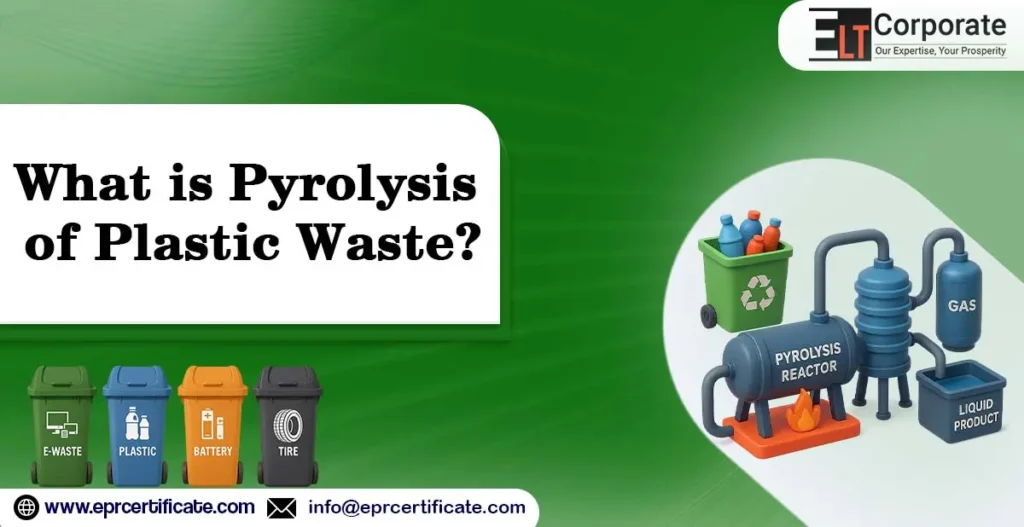
In the thermal breakdown process known as pyrolysis, plastic waste is cooked at temperatures between 300 and 700 °C without the presence of oxygen. It produces liquid fuel, gas, and four by breaking long polymer chains into little molecules instead than burning plastic like stimulants do.
This procedure lessens reliance on fossil fuels by handling non-physical plastic trash and creating alternative energy sources.
Why Does Pyrolysis of Plastic Waste Matter?
- Tackles Non-recyclable Plastic – Converts mixed and multi-layer plastics that cannot be mechanically recycled.
- Reduces Landfill Burden – Minimises plastic accumulation in landfills and oceans.
- Energy Recovery – Produces pyrolysis oil, syngas, and char as useful resources.
- Supports Circular Economy – Turns waste into resource, aligning with sustainability goals.
- Compliance with CPCB Guidelines – Recognised under Plastic Waste Management Rules for co-processing and recycling.
Step-by-Step Process of Pyrolysis of Plastic Waste
Step 1 – Collection & Segregation
Non-recyclable and contaminated plastic waste is collected from households, industries, and municipal solid waste.
Step 2 – Shredding & Cleaning
Plastics are cleaned and shredded into smaller pieces to improve pyrolysis efficiency.
Step 3 – Heating in Pyrolysis Reactor
Shredded plastic is placed in a pyrolysis reactor and heated in the absence of oxygen.
Step 4 – Thermal Decomposition
At high temperatures, long polymer chains break down into smaller hydrocarbons.
Step 5 – Product Recovery
- Pyrolysis Oil – Liquid fuel similar to diesel or furnace oil.
- Syngas – Used for generating heat or electricity.
- Char/Carbon Black – Used in construction, road making, or as fuel.
Documents & Compliance Required for Pyrolysis Units
- Incorporation Certificate of the Company (MoA/AoA/Partnership Deed).
- GST & PAN Registration.
- Consent to Establish (CTE) & Consent to Operate (CTO) from State Pollution Control Board.
- Authorisation from CPCB under Plastic Waste Management Rules, 2016 (Amended 2022).
- Environmental Clearance Certificate (if required).
- Agreement with Municipal Corporations or PROs for waste supply.
- Annual return submission to CPCB/SPCB.
Top 5 Benefits of Pyrolysis of Plastic Waste
- Waste to Wealth – Converts plastic waste into usable fuel.
- Eco-friendly Disposal – Reduces open burning and landfill dumping.
- Alternative Energy Source – Pyrolysis oil reduces dependency on crude oil.
- Revenue Generation – Sale of oil, syngas, and carbon black creates business opportunities.
- Regulatory Compliance – Meets CPCB and Plastic Waste Management Rules, boosting ESG credentials.
Penalties for Non-Compliance
Failure to follow CPCB and Pollution Control Board norms for plastic waste management can result in:
- Heavy fines under the Environment Protection Act, 1986.
- Closure of pyrolysis plant.
- Seizure of non-compliant machinery and products.
- Legal action against company directors.
Why Choose ELT Corporate for Pyrolysis Compliance & Setup?
At ELT Corporate, we provide:
- Guidance in plastic waste authorisation under CPCB.
- Support in obtaining SPCB consents and environmental clearances.
- Legal & technical consultancy for setting up plastic pyrolysis plants.
- End-to-end assistance in documentation, EPR tie-ups, and compliance.
- Cost-effective consulting with high success rate.
Conclusion
Pyrolysis of plastic waste is not just a recycling method, but a permanent waste-to-energy solution. By converting plastic waste into fuel and raw materials, it reduces environmental hazards, supports circular economy, and align with global stability criteria.
With ELT Corporate as your compliance partner, you can install an obedient pyrolysis unit, ensure smooth approval, and contribute to India’s fight against plastic pollution.
FAQs
Q1. What type of plastic waste is suitable for pyrolysis?
Non-purposeable plastic such as multilail packaging, contaminated films and mixed plastic waste are ideal.
Q2. What is the validity of the authority for pyrolysis plant?
Generally, 5 years, subject to renewal and submission of annual returns.
Q3. Can pyrolysis oil be used directly as fuel?
Its use can be mixed with furnaces, boilers, or diesel, subject to BIS standards and pollution control approval.
Now your Pyrolysis of Plastic Waste article is in the same professional style as your EPR guide.
![What Is EPR Annual Compliance? [Importance, Documents & Procedure]](https://eprcertificate.com/wp-content/uploads/2026/04/web-eprt-blog-1-1-300x155.jpg)
![What Is EPR Annual Compliance? [Importance, Documents & Procedure]](https://eprcertificate.com/wp-content/uploads/2026/03/web-eprt-blog-300x155.webp)

![What Is EPR Annual Compliance? [Importance, Documents & Procedure]](https://eprcertificate.com/wp-content/uploads/2026/04/web-eprt-blog-1-1-1024x527.jpg)
![What Is EPR Annual Compliance? [Importance, Documents & Procedure]](https://eprcertificate.com/wp-content/uploads/2026/03/web-eprt-blog-1024x527.webp)