
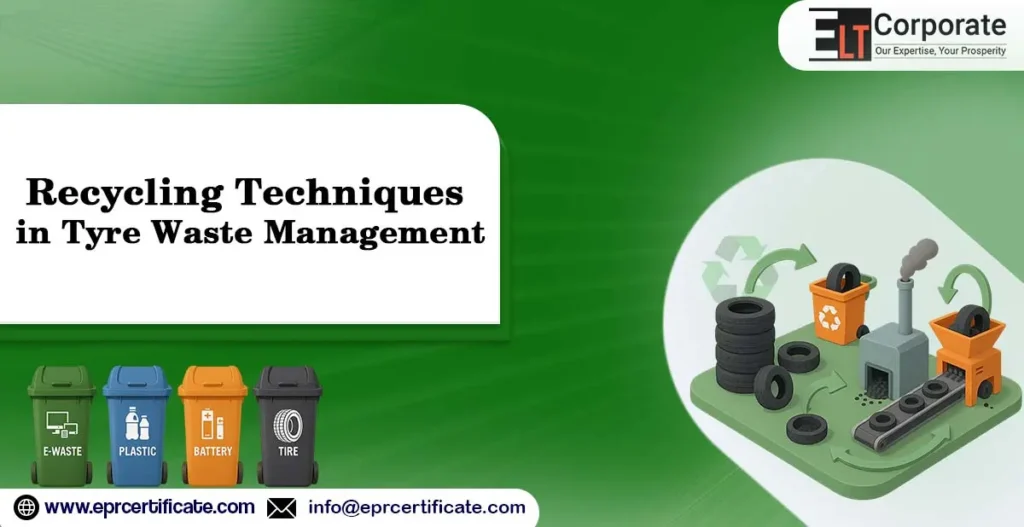
Innovative Tire waste recycling Techniques is one of the most pressure environmental issues due to the rapid development of automobile and transport industries. Millions of tires are released every year, and inappropriate disposal causes land pollution, fire hazards and toxic emissions.
In India, tire recycling is not just a stability exercise, but a compliance needs under dangerous waste management rules, 2016 and extended EPR criteria. This guide describes the latest innovative recycling techniques, their importance and compliance step for businesses in tire waste management.
What Is innovative Tyre waste Recycling?
Tire recycling is the process of reuse, revival or converting life tires into valuable raw materials or products. Unlike traditional disposal, innovative recycling ensures resource recovery and reduces environmental risks.
Different tyre types require specialized recycling processes.
Tyre recycling benefits:
- Consumers – Safer environment, reduced pollution.
- Manufacturers – Meet EPR and sustainability obligations.
- Recyclers – Generate marketable materials like crumb rubber, oil, gas, and steel.
Why Tyre Waste Recycling Matters
- Environmental Protection – Prevents fires, toxic fumes, and soil contamination.
- Resource Recovery – Extracts steel, oil, and rubber for industrial reuse.Compliance Requirement – Required under CPCB/SPCB guidelines and global EPR standards.
- Circular Economy – Promotes sustainable production cycles.
- Energy Efficiency – Recovered rubber and oil reduce dependency on fossil fuels.
Step-by-Step: Innovative Recycling Techniques in Tyre Waste Management
Step 1 – Collection & Segregation
Tyres are collected from workshops, dealers, transport hubs, and segregated by size and type.
Step 2 – Pre-Treatment
Tyres undergo shredding and de-beading to remove steel wires before advanced processing.
Step 3 – Pyrolysis Technology
- Tyres are heated in oxygen-free chambers.
- Produces tyre-derived oil (TDO), carbon black, steel, and gas.
- Oil can be refined into fuel, while carbon black is used in rubber and ink industries.
Step 4 – Cryogenic Recycling
- Tyres are frozen using liquid nitrogen.
- Frozen rubber becomes brittle and is crushed into fine crumb rubber.
- Used in asphalt roads, playgrounds, and sports tracks.
Step 5 – Devulcanization Process
- Breaks the sulphur bonds in rubber.
- Allows rubber to be reprocessed into new tyres or moulded products.
Step 6 – Tyre-Derived Fuel (TDF)
- Shredded tyres are used as alternative fuel in cement kilns and power plants.
- Reduces dependence on coal and improves energy efficiency.
Compliance & Documentation in India
Businesses dealing with tyres must comply with:
- EPR Registration with CPCB (for manufacturers, importers, dealers).
- Collection & Take-back Systems for discarded tyres.
- Hazardous Waste Authorization for recyclers under SPCB.
- Annual Reporting of recycling quantities and partners.
- Labelling & Marking on tyre products for recycling symbols.
Top 5 Benefits of Innovative Tyre Recycling
- Regulatory Compliance – Avoid penalties and business restrictions.
- Stability – Low carbon footprints, global ESG supports goals.
- Market benefits-access to environment-conscious buyers and global trade markets.
- Resource efficiency – Protects raw materials like petroleum, rubber and steel.
- Waste reduction – Tire prevents stockpiles and illegal dumping.
Penalties for Non-Compliance
Failure to recycle tyres responsibly may result in:
- Heavy fines under the Environment Protection Act, 1986.
- Cancellation of EPR authorization.
- Seizure of non-compliant tyre stocks.
- Legal action against violators.
Why Choose ELT Corporate for Tyre Waste Management Compliance?
At ELT Corporate, we provide end-to-end compliance solutions:
- EPR Registration & Reporting – Complete assistance in CPCB applications.
- Collection & Reverse Logistics – Designing take-back systems.
- Recycling Partner Support – Connecting with authorized tyre recyclers.
- Documentation & Labelling – Ensuring compliance with CPCB norms.
- Advisory & Legal Assistance – Handling notices, penalties, and disputes.
Conclusion
The tire recycling is more than waste management-it is an innovative approach to create value from renounced resources. With advanced techniques such as pyrolysis, cryogenic recycling and devulsion, India can reduce environmental threats, promote circular economy practices and recover valuable raw materials.
By partnership with ELT corporate, your business can get compliance, create stability credentials, and a cleaner, greenery can contribute to the future.
![What Is EPR Annual Compliance? [Importance, Documents & Procedure]](https://eprcertificate.com/wp-content/uploads/2026/04/web-eprt-blog-1-1-300x155.jpg)
![What Is EPR Annual Compliance? [Importance, Documents & Procedure]](https://eprcertificate.com/wp-content/uploads/2026/03/web-eprt-blog-300x155.webp)

![What Is EPR Annual Compliance? [Importance, Documents & Procedure]](https://eprcertificate.com/wp-content/uploads/2026/04/web-eprt-blog-1-1-1024x527.jpg)
![What Is EPR Annual Compliance? [Importance, Documents & Procedure]](https://eprcertificate.com/wp-content/uploads/2026/03/web-eprt-blog-1024x527.webp)