
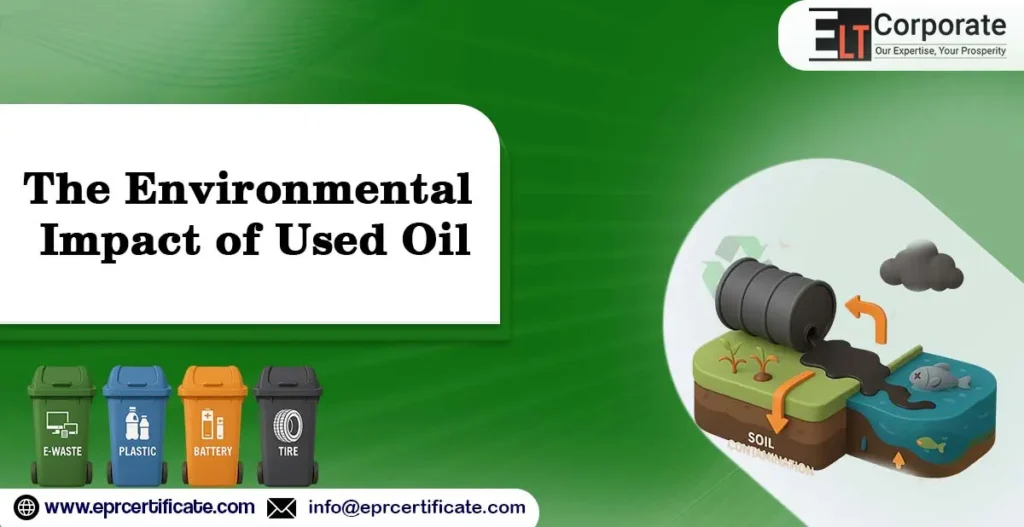
The Impact of Used Oil
The oil used is one of the most dangerous forms of industrial waste. Improper disposal contaminates soil, ground water and air, which pose a serious health and ecological risk. Each liter of oil used can pollute a million liters of water, making its management an important environmental priority. It is now mandatory with EPR certification, business can align compliance with permanent waste management practices.
The guide emphasizes how EPR compliance services in used oil management not only protects the environment, but also helps industries to reduce risks, avoid punishment and create a strong stability profile.
Why Used Oil is an Environmental Threat
- Inappropriate disposal in water contamination drains or soil causes long-term pollution of ground water and rivers.
- Air pollution – Oil used without treatment releases toxic gases and heavy metals.
- Soil fall – The spread reduces soil fertility and damages the local ecosystem.
- Health hazards – prolonged risk can cause respiratory issues, skin diseases and even carcinogenic effects.
Key Benefits of EPR in Used Oil Management
- Pollution Prevention & Risk Mitigation
- Ensures collection and recycling through authorized channels.
- Prevents illegal burning and dumping.
- Resource Recovery & Circular Economy
- Used oil is re-refined into base oil, lubricants, or alternative fuels.
- Reduces dependence on crude imports.
- Compliance & Cost Savings
- Avoids heavy penalties from CPCB/SPCB.
- Reduces disposal costs by converting waste into valuable inputs.
- Industrial & Environmental Growth
- Encourages investment in recycling plants.
- Strengthens India’s ESG (Environmental, Social, Governance) profile.
Future Outlook of Used Oil Recycling
- 2026–2027 – Expansion of re-refining plants across industrial hubs.
- 2028–2030 – Used oil recycling contributes significantly to renewable fuel substitution.
- Beyond 2030 – India becomes a hub for exporting re-refined oil and sustainable lubricants.
Compliance Roadmap for Businesses
To ensure environmental protection and profitability, companies should:
- Get EPR Authority and return the file on time.
- Participated with authorized recycles for refining and energy recovery again.
- Install reverse collection systems with dealers and service centers.
- Invest in advanced treatment technologies such as vacuum distillation and hydrotriting.
- Highlight compliance through eco-labeled and ESG reports to attract global customers.
Why Partner with ELT Corporate?
At ELT Corporate, we help businesses turn compliance into opportunity:
- Complete EPR registration and advisor with CPCB.
- Tie-up with authorized recycles for safe and profitable settlement.
- Legal, documentation and audit support for hassle -free compliance.
- ESG integration, carbon credit and strategic guidance to adopt circular economy.
Frequently Asked Questions (FAQs)
Q1. Why is used oil harmful to the environment?
Used oil contains toxic chemicals and heavy metals that contaminate soil, water, and air if improperly disposed.
Q2. How does EPR certification help businesses?
EPR ensures businesses implement collection and recycling systems, avoid legal penalties, and build eco-friendly branding.
Conclusion
The oil used is not only industrial waste-it is an environmental threat with long-term results. Through EPR certification, business can reduce risks, protect natural resources and unlock economic opportunities.
By partnering with ELT corporate, your company can ensure permanent compliance, reduce liabilities and contribute to India’s green and circular economy.
![What Is EPR Annual Compliance? [Importance, Documents & Procedure]](https://eprcertificate.com/wp-content/uploads/2026/04/web-eprt-blog-1-1-300x155.jpg)
![What Is EPR Annual Compliance? [Importance, Documents & Procedure]](https://eprcertificate.com/wp-content/uploads/2026/03/web-eprt-blog-300x155.webp)


![What Is EPR Annual Compliance? [Importance, Documents & Procedure]](https://eprcertificate.com/wp-content/uploads/2026/04/web-eprt-blog-1-1-1024x527.jpg)
![What Is EPR Annual Compliance? [Importance, Documents & Procedure]](https://eprcertificate.com/wp-content/uploads/2026/03/web-eprt-blog-1024x527.webp)