
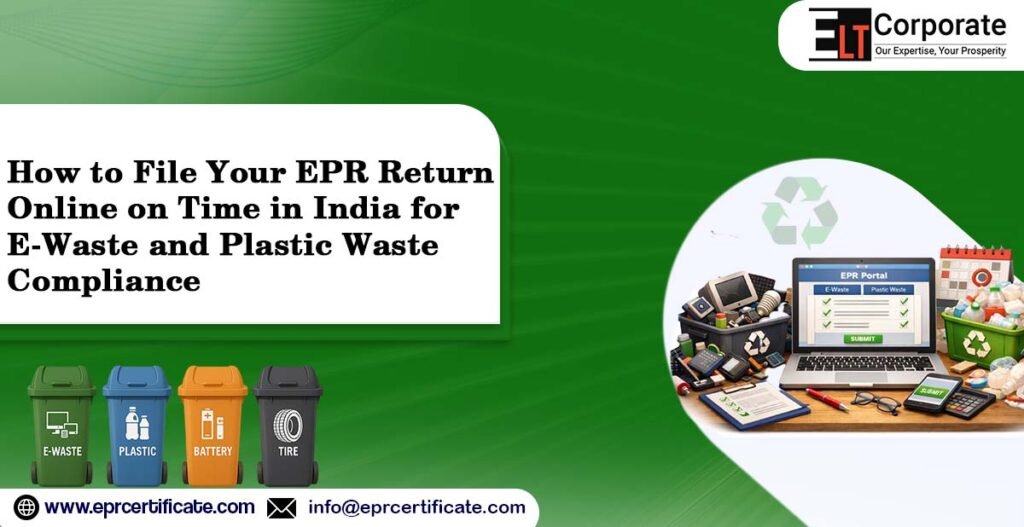
Are you a manufacturer, importer, or brand owner in India dealing with e-waste or plastic waste? Do you find the world of Extended Producer Responsibility (EPR) regulations confusing, with looming deadlines and the fear of penalties?
You’re not alone. India’s EPR framework is crucial for sustainable waste management, but navigating its complexities can be a significant challenge for businesses of all sizes. From understanding the nuances of e-waste EPR registration to accurately filing your plastic waste EPR returns, staying compliant is non-negotiable.
This comprehensive guide will demystify the process, providing clear, actionable steps to help you file your EPR certificate online returns on time for 2024-25. We’ll cover everything from key definitions and deadlines to common pitfalls and advanced compliance strategies, ensuring your business stays on the right side of the law.
Understanding the EPR Compliance Landscape in India for 2024-25
Extended Producer Responsibility (EPR) places the onus on producers, brand owners, and importers to manage the end-of-life cycle of their products. This responsibility extends from collection and segregation to transportation and environmentally sound disposal or recycling.
The Indian government, through the Central Pollution Control Board (CPCB) and the Ministry of Environment, Forest, and Climate Change (MoEFCC), has established stringent rules for various waste streams. These include the Plastic Waste Management Rules, 2016 (amended up to 2024), the E-Waste Management Rules, 2022, and the Battery Waste Management Rules, 2022.
The market for EPR credits alone is booming, valued at approximately USD 982 million in 2024 and projected to reach USD 1.67 billion by 2030. This growth underscores the increasing importance of robust waste management systems. In FY 2024-25, India generated a staggering 1.39 million tonnes of plastic waste, highlighting the critical need for effective EPR compliance. Recycling targets are ambitious, starting at 30-50% for various plastics in FY 2024-25 and escalating to 70% in the following year, with some categories like rigid plastics aiming for 80%.
Compliance is not just about environmental responsibility; it’s about business continuity. Recent audits by the CPCB revealed nearly 600,000 fake EPR certificates. This fraudulent activity, equating to 700,000 certificates for 38 times the verified processing capacity of recyclers, highlights the stringent scrutiny now in place. Businesses must ensure their EPR compliance is legitimate and verifiable.
Key Benefits of Timely EPR Compliance
Beyond avoiding penalties, proactive and timely EPR compliance offers several strategic advantages for your business:
Enhanced Brand Reputation: Demonstrates a commitment to environmental sustainability, appealing to eco-conscious consumers and stakeholders. Operational Efficiency: Streamlined waste management processes can lead to cost savings and improved resource utilization in the long run.
Avoidance of Legal Repercussions: Protects your business from hefty fines, legal disputes, and potential license suspension.
Market Access: Increasingly, business partners and international markets require proof of environmental compliance, making EPR an essential credential.
Access to EPR Credits: For those exceeding targets, the EPR credit trading system offers a new revenue stream or cost-saving mechanism.
Contribution to a Circular Economy: Plays a vital role in India’s broader environmental goals by promoting recycling and responsible disposal.
Required Documents for EPR Certificate Online Application
The documentation required for EPR certificate online registration varies slightly between e-waste and plastic waste. Ensuring you have all necessary paperwork in order is crucial to avoid rejections and delays.
For E-Waste EPR Registration:
Company Registration Documents: Certificate of Incorporation, Memorandum and Articles of Association (for companies) or Partnership Deed (for firms). GST Certificate: Mandatory for businesses with multi-state operations. PAN Card: Of the company/proprietor.
Authorized Signatory Documents: Aadhaar card and PAN card of the authorized person, along with an authorization letter.
Product Details: List of electrical and electronic equipment (EEE) placed on the market, including quantities and weight (per product category as per E-Waste Rules). Projections: Estimated e-waste generation for the next five years.
E-Waste Collection Mechanism: Details of collection centers, take-back systems, or agreements with authorized e-waste recyclers/dismantlers.
Agreements with Recyclers/Dismantlers: Copies of agreements with CPCB authorized entities for processing your e-waste.
Producer Responsibility Organization (PRO) Agreement (if applicable): If outsourcing EPR responsibilities to a PRO.
CPCB EPR Authorization Certificate: Required for renewal applications.
For Plastic Waste EPR Registration:
Company Registration Documents: Similar to e-waste, including Certificate of Incorporation/Partnership Deed.
GST Certificate: Essential for pan-India operations.
PAN Card: Of the entity.
Authorized Signatory Documents: Aadhaar and PAN card with authorization letter.
Plastic Packaging Details: Information on the type and quantity of plastic packaging placed on the market (rigid, flexible, multi-layered, compostable).
Projections: Estimated plastic waste generation for the next five years. Waste Management Plan: Details of how plastic waste will be collected, segregated, and channeled to recyclers.
Agreements with Recyclers/Processors: Copies of agreements with registered Plastic Waste Processors (PWPs) for recycling or processing plastic waste. PRO Agreement (if applicable): If engaging a PRO for compliance.
Extended Producer Responsibility (EPR) Certificate: For renewal purposes.
Validity of EPR Certificate Online
An EPR certificate, once granted, typically has a validity period of five years. It is crucial to monitor this validity closely, as non-renewal can lead to severe penalties and a lapse in compliance.
The renewal process usually involves submitting an application at least 60 to 90 days before the expiry date. This ensures sufficient time for the CPCB to review your compliance records and issue a new certificate without interruption to your operations. The renewal application requires updated compliance data, proof of fulfilling previous targets, and current agreements with recyclers or PROs.
Process/Step-by-Step Procedure for EPR Return Filing Online
Filing your EPR returns online involves navigating the CPCB’s dedicated portals. While the general flow is similar, it’s vital to use the correct portal for your specific waste category.
Phase 1: EPR Registration (One-Time Process)
- Visit the CPCB Portal: For e-waste, go to the E-Waste Management Portal. For plastic waste, access the Plastic Waste Management Portal.
- New Registration: Click on “New Registration” or “Apply for EPR Authorization.” 3. Fill Application Form: Provide all company details, authorized signatory information, and product categories.
- Upload Documents: Attach all required documents as specified in the previous section. Ensure documents are clear, properly formatted, and within size limits. 5. Submit and Pay Fees: Review your application, submit it, and pay any applicable government processing fees (currently, no direct government fees for registration, but
check for updates).
- CPCB Review: The CPCB will scrutinize your application. Be prepared for queries or requests for additional information.
- Authorization Grant: Upon successful review, you will receive your EPR Authorization Certificate.
Phase 2: Quarterly and Annual Return Filing (Ongoing Process) Once registered, the focus shifts to regular compliance reporting.
- Login to Your Account: Use your registered credentials to log in to the respective CPCB portal.
- Navigate to Return Filing: Locate the section for “Quarterly Returns” or “Annual Returns.”
- Select Reporting Period: Choose the financial quarter or year you are reporting for (e.g., Q1: April-June, Q2: July-Sept, Q3: Oct-Dec, Q4: Jan-Mar).
- Input Data: Accurately enter details regarding:
Quantity of products placed on the market.
Quantity of waste collected (through your own channels or PROs).
Quantity of waste sent for recycling/processing (with details of recyclers/PWPs). EPR credits purchased/sold (if applicable).
Any discrepancies or challenges faced during the period.
- Upload Supporting Documents: This typically includes invoices from recyclers, proof of material dispatched, EPR credit transaction records, and agreements. 6. Declaration and Submission: Carefully review all entered data. Acknowledge the declaration stating the accuracy of information, then submit the return. 7. Confirmation: You will receive a submission confirmation, which should be saved for your records.
Practical Tip: Maintain detailed records throughout the year. This includes purchase orders for raw materials, sales data for products, agreements with recyclers/PROs, and actual waste collection/processing receipts. This makes quarterly and annual filing much smoother.
2024-25 EPR Filing Calendar: Critical Deadlines
Missing deadlines is one of the most common reasons for penalties. Here’s a comprehensive overview of the key dates for e-waste EPR registration and plastic waste EPR compliance:
Quarterly Return Deadlines for FY 2024-25 (Both E-Waste & Plastic Waste)
Quarter 1 (April – June 2024): Due by July 31, 2024
Quarter 2 (July – September 2024): Due by October 31, 2024
Quarter 3 (October – December 2024): Due by January 31, 2025
Quarter 4 (January – March 2025): Due by April 30, 2025
Annual Return Deadlines for FY 2024-25 (Both E-Waste & Plastic Waste)
Annual Return for FY 2024-25: Initially due by June 30, 2025, but often extended. The CPCB recently extended the deadline for the previous financial year. Businesses should anticipate a similar extension for FY 2024-25, likely until January 31, 2026. However, always refer to the latest CPCB notifications for precise dates.
Note: These dates are standard. Always cross-reference with the latest notifications on the CPCB website, as rules and deadlines can be subject to change. Setting calendar reminders and internal alerts is highly recommended.
Common Mistakes to Avoid in EPR Filing
Even experienced businesses can stumble over common errors that lead to application rejections or compliance failures. Here’s how to prevent them:
Incomplete Documentation: The most frequent reason for rejection. Ensure every single document listed in the CPCB checklist for your specific waste category is provided, complete, and up-to-date.
Incorrect Waste Categorization: Misclassifying your products (e.g., rigid plastic as flexible) can lead to incorrect targets and non-compliance. Understand the precise definitions in the rules.
Mismatched Data: Ensure the quantities reported for products placed on the market align with your sales records and that waste collected matches recycler invoices. Discrepancies raise red flags.
Invalid Recycler/PWP Agreements: Verify that your agreements are with CPCB authorized and currently registered recyclers or Plastic Waste Processors (PWPs). Outdated or unverified agreements are invalid.
Ignoring Multi-State GST Requirements: For businesses operating across multiple states, providing GST certificates for all operational states is mandatory. Incomplete GST details are a common rejection reason.
Late Filing: Submitting returns even a day late can trigger penalties. Always aim to submit well before the deadline.
Neglecting Quarterly Returns: While annual returns are comprehensive, quarterly filings are equally important for ongoing compliance tracking.
Not Understanding EPR Credits: If engaging in credit trading, ensure you understand how to generate, purchase, and redeem credits correctly to meet targets.
Practical Strategy: Before submission, conduct an internal audit of your documents and data. Consider using a compliance checklist tailored to your waste stream and product type. Many businesses have a dedicated team member or external consultant double-check all submissions.
What Happens If You Ignore EPR Compliance?
Ignoring EPR compliance or filing inaccurate returns carries significant risks and severe penalties under Indian environmental laws.
Financial Penalties: The CPCB levies hefty fines. Base fines can range from INR 10,000 to INR 1.5 million. For continuing violations, a daily penalty of INR 10,000 is imposed. Severe violations can attract fines up to INR 10 million (approximately US$120,000). For Plastic Waste Management Rules specifically, penalties can range from ₹2,900 to ₹7,900 per tonne of unmanaged waste.
Environmental Compensation: Beyond fines, businesses may be liable for environmental compensation for damages caused by unmanaged waste. Legal Action: Non-compliance can lead to prosecution under the Environment (Protection) Act, 1986, which includes imprisonment for individuals responsible. License Suspension/Cancellation: Repeated or severe non-compliance can result in the suspension or even cancellation of your business license to operate. Reputational Damage: News of environmental non-compliance can severely damage your brand image, leading to loss of customer trust and market share.
Supply Chain Disruptions: Non-compliant businesses may face restrictions on sourcing raw materials or selling products, disrupting their entire supply chain.
The CPCB is actively monitoring compliance. The discovery of 600,000 fake EPR certificates underscores the board’s increasing vigilance and willingness to take enforcement actions against fraudulent or non-compliant entities. Proactive compliance is the only way to safeguard your business.
The Cost Involved in EPR Compliance
While the goal is to file your EPR certificate online, the actual cost of compliance extends beyond direct government fees. Here’s a breakdown:
Government Fees: Currently, the CPCB generally does not charge direct application or return filing fees for EPR registration. However, this is subject to change, and specific state pollution control boards (SPCBs) might have minor charges for certain activities.
Documentation and Internal Manpower Costs: Preparing all necessary documents, gathering data, and coordinating with departments internally requires significant time and effort. This can be estimated anywhere from INR 10,000 to INR 50,000 in internal resource costs.
Consultancy Fees: Many businesses opt for specialized EPR consultants to navigate the complex process, reduce rejection rates (which can be as high as 40% for self filers), and ensure timely compliance. These fees can range from INR 25,000 to over INR 1,00,000, depending on the complexity of your business and waste stream. Recycling/Processing Costs: This is often the most significant component. Businesses must bear the cost of collecting, transporting, and recycling/processing their designated waste. These costs vary widely based on the type of waste, quantity, and market rates, typically ranging from INR 5 to INR 20 per kilogram.
EPR Credit Purchase (if applicable): If you cannot meet your recycling targets directly, you may need to purchase EPR credits from other compliant entities or recyclers. The cost of these credits fluctuates based on demand and supply. Audit and Verification Costs: Some businesses may undergo independent audits to verify their compliance, incurring additional costs.
Considering the potential penalties (up to INR 10 million), investing in proper compliance, whether through internal resources or expert consultants, is a far more economical and secure approach.
How ELT Can Help You with EPR Compliance
Navigating the intricacies of EPR compliance, especially for e-waste EPR registration and plastic waste EPR, can be daunting. At ELT, we understand these challenges and are dedicated to simplifying the entire process for your business.
Our platform and expert services are designed to support you at every stage, from initial registration to ongoing return filing and strategic compliance management:
Simplified Registration Process: We provide a guided, step-by-step approach to help you complete your EPR certificate online registration efficiently. Our experts assist in preparing and reviewing all necessary documentation, significantly reducing the chances of rejection.
Accurate Document Preparation: We offer comprehensive checklists and direct assistance in compiling all mandatory and optional documents, ensuring they meet CPCB’s stringent requirements.
CPCB Portal Navigation Assistance: Our team provides hands-on support in understanding and navigating the CPCB portals, guiding you through data entry for both quarterly and annual returns.
Timely Filing Reminders: We keep track of all critical deadlines for your specific waste categories and provide timely reminders, helping you avoid late submissions and associated penalties.
Expert Consultation: Our experienced consultants offer personalized advice on waste categorization, target setting, and the most cost-effective compliance strategies for your business.
Network of Authorized Recyclers/PROs: We help you connect with CPCB authorized recyclers, dismantlers, and Producer Responsibility Organizations (PROs) to fulfill your collection and processing obligations effectively.
EPR Credit Management: If you need to buy or sell EPR credits, we facilitate these transactions, ensuring transparency and compliance with regulatory guidelines. Multi-State Compliance Solutions: For businesses operating across various Indian states, we provide tailored guidance to ensure seamless compliance with diverse state specific requirements.
Post-Filing Support: We assist with query resolution from CPCB, certificate verification, and strategic planning for future compliance periods.
By partnering with ELT, you gain a reliable ally in your journey towards complete and hassle free EPR compliance, allowing you to focus on your core business while we handle the complexities of environmental responsibility.
Conclusion
EPR compliance in India is a dynamic and essential aspect of responsible business operations, particularly for those managing e-waste and plastic waste. Timely and accurate filing of your EPR certificate online returns is not merely a regulatory obligation but a strategic imperative that safeguards your business, enhances your reputation, and contributes to a greener future.
The 2024-25 financial year brings clear deadlines and increased scrutiny from the CPCB. By understanding the required documents, following the step-by-step online filing procedure, and actively avoiding common mistakes, your business can navigate this complex landscape with confidence. Remember the severe penalties for non-compliance, which underscore the importance of proactive engagement.
Don’t let the intricacies of e-waste EPR registration or plastic waste EPR overwhelm you. Leverage expert guidance and tools to ensure your compliance journey is smooth and successful. The time to act is now. Review your current compliance status, gather your documents, and prepare to file your returns on time to secure your business’s future and uphold your environmental commitment.
SEO-Friendly FAQs
Q1: What happens if I miss the EPR return filing deadline?
Missing EPR return filing deadlines can lead to significant financial penalties. The CPCB can impose immediate fines starting at INR 10,000. Additionally, daily fines of INR 10,000 can be levied for continuing violations until compliance is achieved.
Serious and persistent delays may result in more severe actions, including the suspension or even cancellation of your business license to operate. This can severely disrupt your supply chain and damage your brand reputation, making timely filing crucial.
Q2: How do I handle EPR compliance for multiple product categories (e waste and plastic)?
If your business deals with both e-waste and plastic waste, you must register separately for each waste category. This involves using the respective CPCB portals for e-waste and plastic waste management.
You will need to file separate quarterly and annual returns for each category, adhering to their specific rules, targets, and documentation requirements. Many businesses find it beneficial to maintain distinct records and compliance strategies for each waste stream to ensure accuracy.
Q3: What documents are most commonly rejected in EPR applications?
Several documentation issues frequently lead to EPR application rejections. These often include incomplete or outdated GST certificates, especially for businesses operating in multiple states, where all state GST registrations must be provided.
Missing or invalid agreements with CPCB-authorized recyclers or Plastic Waste Processors (PWPs) are also common. Furthermore, discrepancies in waste generation estimates or improper formatting and unclear scans of documents can cause delays. Always use the official checklists to verify everything.
Q4: How can I verify if my EPR certificate is valid and recognized?
You can verify the validity of your EPR certificate directly through the CPCB’s official EPR portals. Each certificate has a unique identification number that can be used for verification.
Look for digital QR codes on the certificate, if available, which can be scanned to confirm authenticity. Always ensure the certificate clearly states the issuing authority (CPCB or concerned SPCB), the waste category it covers, and its validity period, which is typically five years from the date of issue.
Q5: What’s the difference between quarterly and annual EPR returns?
Quarterly EPR returns are mandatory reports filed at the end of each financial quarter, typically by the last day of the month following the quarter. These returns provide an ongoing snapshot of your compliance activities, including quantities of products placed on the market and waste collected.
Annual EPR returns are comprehensive reports covering the entire financial year. These are usually due by June 30th of the subsequent year, though extensions (like to January 31, 2026, for FY 2024-25) are common. Both types of returns are critical for demonstrating continuous compliance and meeting your EPR targets.
Q6: How much does EPR compliance actually cost businesses?
The cost of EPR compliance for businesses varies but includes several components. While direct government fees for EPR registration or filing are currently minimal, there are significant indirect costs. These include internal costs for documentation and data gathering (approx. INR 10,000-50,000) and consultant fees (INR 25,000-1,00,000+ for expert guidance).
The largest cost often comes from meeting your recycling targets, which involves collection, transportation, and processing expenses with authorized recyclers, typically ranging from INR 5 to INR 20 per kilogram. Additionally, there might be costs for purchasing EPR credits if you cannot meet targets directly. These costs are a necessary investment to avoid much higher penalty risks.
Q7: Can I handle EPR compliance myself or do I need a consultant?
While technically possible to manage EPR compliance yourself, the complexity of the regulations, strict documentation requirements, and potential technical issues with CPCB
portals often make it challenging for businesses. The rejection rate for self-filed applications can be as high as 40%.
Around 85% of businesses choose to engage consultants due to their expertise in navigating regulatory nuances, preparing accurate documentation, and ensuring timely submissions. Consultants can significantly reduce the risk of rejection and penalties, allowing businesses to focus on their core operations while ensuring full compliance.
“`
![What Is EPR Annual Compliance? [Importance, Documents & Procedure]](https://eprcertificate.com/wp-content/uploads/2026/04/web-eprt-blog-1-1-300x155.jpg)
![What Is EPR Annual Compliance? [Importance, Documents & Procedure]](https://eprcertificate.com/wp-content/uploads/2026/03/web-eprt-blog-300x155.webp)

![What Is EPR Annual Compliance? [Importance, Documents & Procedure]](https://eprcertificate.com/wp-content/uploads/2026/04/web-eprt-blog-1-1-1024x527.jpg)
![What Is EPR Annual Compliance? [Importance, Documents & Procedure]](https://eprcertificate.com/wp-content/uploads/2026/03/web-eprt-blog-1024x527.webp)