
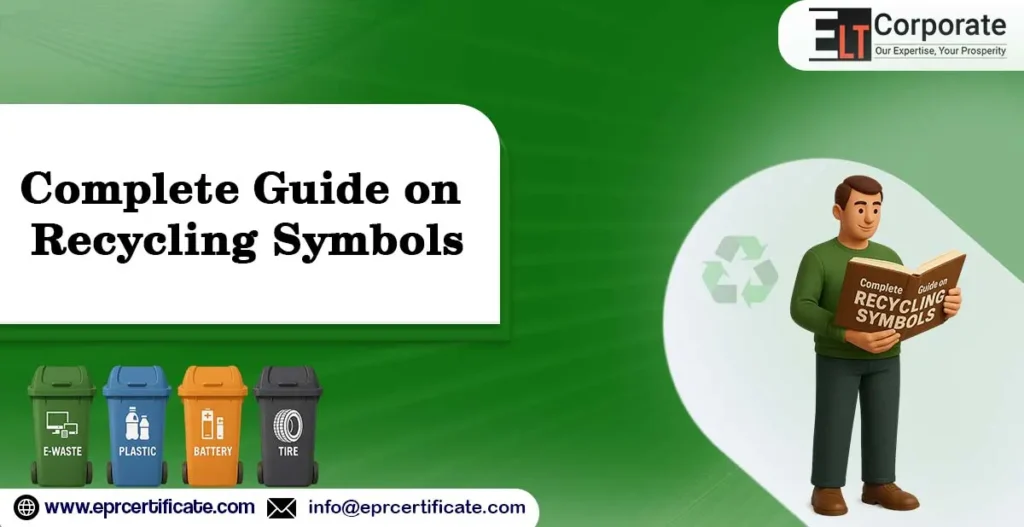
Complete guides on recycling symbols printed on packaging and plastic items, these symbols guide the manufacturers, consumers and recycles the recycler as to how to manage the waste responsibly. In India, understanding recycling symbols is especially important for compliance with plastic waste management rules, 2016 and align with global circular economy practices.
This guide can benefit by adopting separate recycling symbols, their meanings, compliance requirements and permanent labeling of businesses.
What Are Recycling Symbols?
Recycling symbols are illustrated icons that indicate whether a product or packaging material can be recycled, reused, or requiring special disposal. These symbols are often in the form of a triangle with arrows (mobiles loops), sometimes there are numbers or letters that reflect the material type.
They help:
- Consumers – make eco-friendly choices.
- Manufacturers – comply with CPCB/EPR obligations.
- Recyclers – identify material composition for proper processing.
Why Recycling Symbols Matter
- Consumer Awareness – Informs buyers about sustainable choices.
- Regulatory Compliance – Required under Plastic Waste Management Rules and EPR guidelines.
- Efficient Recycling – Helps recyclers segregate materials correctly.
- Global Trade – Essential for exports to markets where eco-labeling is mandatory.
- Supports ESG Goals – Enhances corporate responsibility and brand image.
Common Recycling Symbols and Their Meanings
1. Mobius Loop (Three Arrows Triangle)
Indicates the product can be recycled. Sometimes it may include a percentage, showing recycled content.
2. Plastic Resin Identification Codes (1–7)
Numbers inside a triangle specify the plastic type:
- 1 – PET (polyethylene terefthelet): Used in bottles, packaging. Widespread recycling.
- 2-HDPE (high density polyethylene): Containers are used in milk jugs/bottles Easily recycling.
- 3 – PVC (Polyvinyl chloride): pipe, blister pack. Recycle is difficult.
- 4-LDPE (“low-density polyethylene, films, carry bags): bags, movies carry. Limited recycled.
- 5 – (Polypropylene): Cap, Curd Cup. Rapid recycling.
- 6 – PS (polystinine): disposable cutlery, foam. Rarely recycled.
- 7-Anya (mixed plastic): Multi-layer packaging, bioplastics. Recycle is difficult.
3. Green Dot
Common in Europe, indicates the producer has contributed financially to recycling.
4. Tidyman Symbol
Encourages consumers to dispose waste responsibly.
5. Compostable Symbol (Leaf/Seedling)
Indicates the material is suitable for composting under specific conditions.
6. Glass, Aluminium & Paper Symbols
Identify packaging made of glass, metals, or paper that can be recycled separately.
Compliance & Documentation Required for Recycling Symbols in India
Businesses using recycling symbols must align with CPCB and BIS guidelines:
- EPR Registration under CPCB.
- Plastic Waste Management Authorization.
- Labeling Compliance as per PWM Rules.
- BIS Standards for recyclability and eco-marking.
- Annual Returns to SPCB/CPCB on plastic use and recycling.
Top 5 Benefits of Using Recycling Symbols
- Regulatory Compliance – Meets CPCB labeling requirements.
- Consumer Trust – Builds eco-conscious brand image.
- Operational Efficiency – Eases segregation for recyclers.
- Market Access – Essential for exports to EU/US with strict eco-label norms.
- Supports EPR Goals – Simplifies reporting and accountability.
Penalties for Non-Compliance
Not following recycling symbol guidelines can lead to:
- Fines under Environment Protection Act, 1986.
- Ban on non-compliant packaging.
- Suspension of EPR license.
- Seizure of goods and legal action.
Why Choose ELT Corporate for Recycling Compliance?
At ELT Corporate, we help businesses:
- Ensure correct labeling & recycling symbols on packaging.
- Get EPR authorisation from CPCB.
- Maintain compliance reports & annual returns.
- Adopt sustainable packaging strategies.
- Reduce compliance risk with expert advisory.
Conclusion
Recycling symbols are more than just small marks on packaging – they are powerful tools for building a permanent future. By adopting the right recycling label, business compliance can, strengthen the brand trust and contribute to a circular economy.
With ELT Corporate as your compliance partner, you can make sure that your packaging CPCB follows the rules, avoids punishment, and shows your brand as environmentally responsible.
![What Is EPR Annual Compliance? [Importance, Documents & Procedure]](https://eprcertificate.com/wp-content/uploads/2026/04/web-eprt-blog-1-1-300x155.jpg)
![What Is EPR Annual Compliance? [Importance, Documents & Procedure]](https://eprcertificate.com/wp-content/uploads/2026/03/web-eprt-blog-300x155.webp)

![What Is EPR Annual Compliance? [Importance, Documents & Procedure]](https://eprcertificate.com/wp-content/uploads/2026/04/web-eprt-blog-1-1-1024x527.jpg)
![What Is EPR Annual Compliance? [Importance, Documents & Procedure]](https://eprcertificate.com/wp-content/uploads/2026/03/web-eprt-blog-1024x527.webp)